
Your search “ ”
Jobs
TRAINEE PROJECT FFPA DEATH PENALTY
on 30 July 2026
Comprising over 200 NGOs, bar associations, local authorities and trade unions, the World Coalition Against the Death Penalty aims to strengthen the international dimension of the fight against the death penalty.
2026

13th World Day Against the Death Penalty: Drug Trafficking
on 25 June 2026
On October 10, 2015, the World Coalition Against the Death Penalty is drawing attention to the death penalty for drug trafficking, to reduce its use.
2026
Drug Offenses

15th World Day Against the Death Penalty: Poverty
on 25 June 2026
On 10 October 2017, the 15th World Day Against the Death Penalty aims at raising awareness about the reasons why people living in poverty are at a greater risk of being sentenced to death and executed.
Trend Towards Abolition

16th World Day Against the Death Penalty – Living conditions on death row
on 25 June 2026
On 10 October 2018, the 16th World Day Against the Death Penalty aims at raising awareness on the inhumane living conditions of people sentenced to death.
Death Row Conditions
Page(s)
Cookie Policy
on 19 December 2024
Effective Date: 19-Dec-2024 Last Updated: 19-Dec-2024 What are cookies? This Cookie Policy explains what cookies are and how we use them, the types of cookies we use i.e, the information we collect using cookies and how that information is used, and how to manage the cookie settings. Cookies are small text files that are […]
2024
Page(s)
Podcasts recomendations
on 14 March 2023
Podcasts or series of podcasts by our members Broken Law Podcast Hosted by the staff of the American Constitution Society. Episode 23: How the World Views the Death Penalty Released on: Nov. 09, 2021 Listen to Podcast ADPAN Podcasts Series of podcasts hosted by The Anti-Death Penalty Asia Network Listen to Podcast Other podcasts to […]
2023
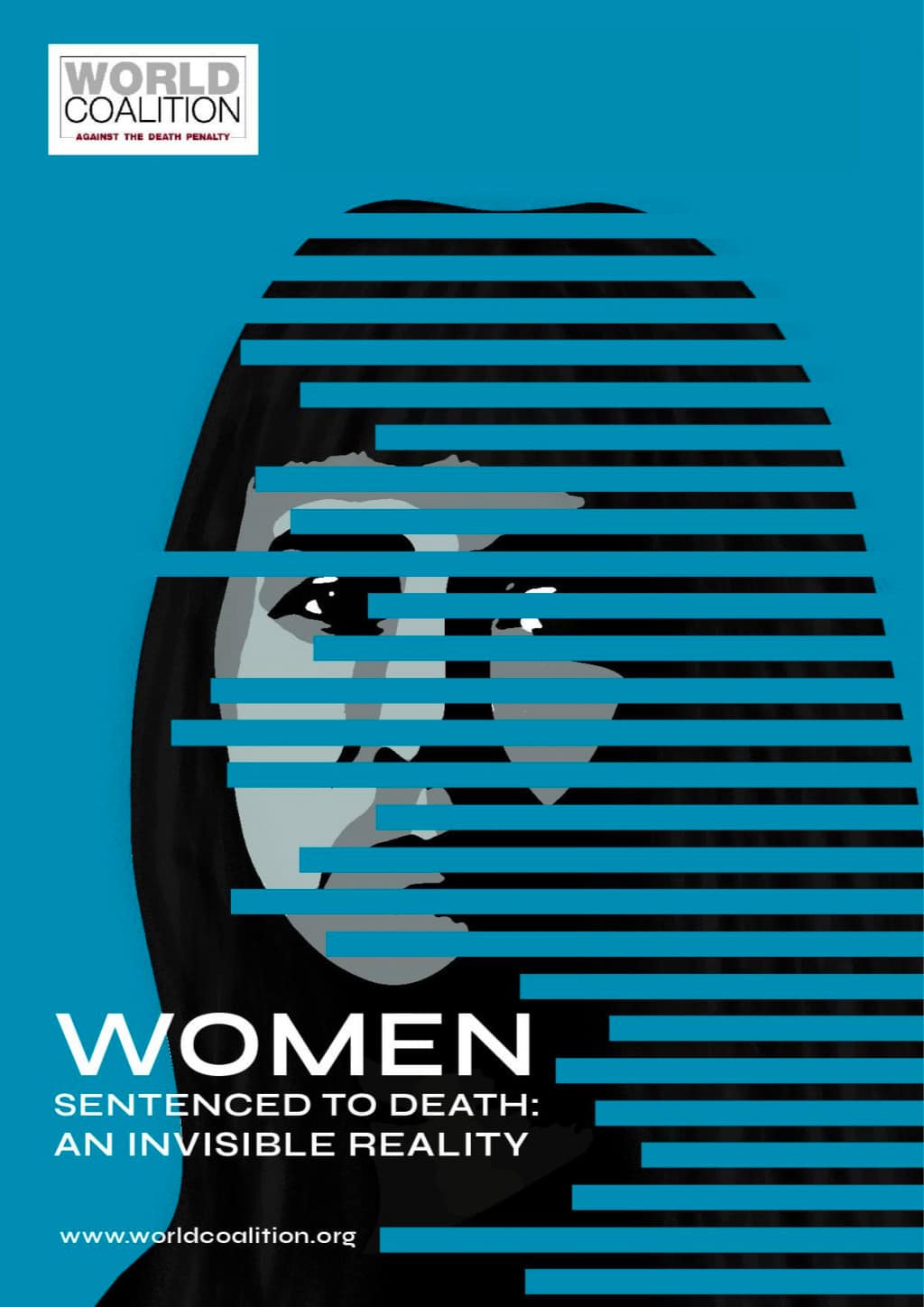
Making gender discrimination in capital punishment visible
on 6 March 2023
Understanding the link between gender discrimination and the death penalty – Women and the death penalty – Gender and sexual minorities and the death penalty Gender and the Death Penalty at the World Coalition – Strengthen the capacity of civil society organizations – Strengthen links with women’s, gender and sexual minority rights movements and organizations […]
2023
Gender
Women
Document(s)
The Death Penalty in Kenya: A Punishment that has Died Out in Practice, Part Two – Overwhelming Support for Abolition Among Opinion Leaders
on 15 June 2022
2022
NGO report
Kenya
Public Opinion
More details See the document
In 2021, The Death Penalty Project and the Kenya National Commission on Human Rights, in partnership with the Australian National University commissioned Prof. Carolyn Hoyle, Director of The Death Penalty Research Unit, at the University of Oxford, to undertake research in order to provide accurate data on attitudes towards the death penalty in Kenya and facilitate a constructive conversation on the future of capital punishment. The research examined the views of both the general public in Kenya and also opinion formers, those considered influential in shaping, and responding to, national views.
Key findings :
– The vast majority of opinion formers that took part in the interviews were in favour of abolishing the death penalty.
– 90% of opinion formers were in favour of abolishing the death penalty
– 82% of opinion formers were strongly in favour of of abolishing the death penalty
– Most of the opinion formers interviewed were very well informed on the administration of the death penalty in Kenya.
– Across both groups there were concerns around the possibility that innocent people could be sentenced to death.
– 88% of opinion formers believe wrongful convictions occur fairly regularly
– 93% of opinion formers thought Kenya should be influenced by high rates of abolition around the world
– Opinion formers believed that 75% of the public would accept abolition of the death penalty, despite initial reservations.
- Document type NGO report
- Countries list Kenya
- Themes list Public Opinion
Document(s)
The Death Penalty in Kenya: A Punishment that has Died Out in Practice, Part One – A Public Ready to Accept Abolition
on 15 June 2022
NGO report
Kenya
Public Opinion
More details See the document
In 2021, The Death Penalty Project and the Kenya National Commission on Human Rights, in partnership with the Australian National University commissioned Prof. Carolyn Hoyle, Director of The Death Penalty Research Unit, at the University of Oxford, to undertake research in order to provide accurate data on attitudes towards the death penalty in Kenya and facilitate a constructive conversation on the future of capital punishment. The research examined the views of both the general public in Kenya and also opinion formers, those considered influential in shaping, and responding to, national views.
Key findings:
– 40% in favour of abolishing the death penalty, 10% did not know either way
– 51% in favour of retaining the death penalty, only 32% strongly in favour
– Those against the death penalty believed that criminals deserved the opportunity for rehabilitation.
– Knowledge of the death penalty appears to be limited, just 66% were aware Kenya retains the death penalty and just 21% knew no executions had take place in the past 10 years
– The public expressed concerns around the possibility that innocent people could be sentenced to death: 61% of the public – including retentionists – thought that ‘many’ or ‘some’ innocent people have been sentenced to death in Kenya; only 8% thought that ‘no innocent people have been sentenced to death’
– Public support fell from 51% to 31% when considering abolition in the region
59% of the public, who were initially in favour of retention, said that they would accept a new policy of abolition
- Document type NGO report
- Countries list Kenya
- Themes list Public Opinion
Document(s)
Living Under Sentence of Death
on 22 April 2022
2022
Academic report
NGO report
Bangladesh
Death Row Conditions
More details See the document
In 2019-20, The Department of Law at the University of Dhaka, in collaboration with the Bangladesh Legal Aid and Services Trust (BLAST) and The Death Penalty Project, conducted a study to investigate socio-economic characteristics and experiences of death row prisoners in Bangladesh.
Bangladesh continues to retain and implement the death penalty, with several executions taking place each year. Excluding laws relating to the defence forces and international crimes, there are currently 33 crimes punishable by death. 25 of these offences are non-lethal and arguably do not meet the threshold of the ‘most serious crimes’ under international law.
Inspired by similar studies in other countries, a pilot study was commissioned to examine the demographics and experiences of those sentenced to death. Consistent with those studies around the world, our findings evidence that the death penalty in Bangladesh is disproportionately used against the most vulnerable and marginalised sections of society.
72% of prisoners were classified as economically vulnerable
53% of prisoners were in low-paid work or unemployed
87% of prisoners had no qualifications beyond secondary school level
15% of prisoners had no formal education.
The study also raised serious concerns around the treatment of prisoners, the length of time prisoners spent in prison under the sentence of death and the integrity of criminal investigations and trial.
33% of prisoners’ families alleged their relative had been tortured in police custody, 5% suspected this and 15% refused to comment
60% of respondents were not satisfied with the trial process, with some claiming that the courts had failed to properly appreciate the evidence
On average it took over 10 years for death row cases to be disposed by the HCD (where sentences are confirmed). Prolonged time spent in isolation on death row, has been declared inhumane and degrading in many countries.
The sample consisted of 39 individuals on death row, evidence from their case files and face-to-face interviews with their families were conducted under rigorous ethical guidelines to reveal their profiles and experiences. Despite its small size, the sample is indicative of the general prison population allowing us to draw conclusions on possible trends.
- Document type Academic report / NGO report
- Countries list Bangladesh
- Themes list Death Row Conditions