Page(s)
What is the Risk that the Death Penalty Will Return in Your Country?
on 20 August 2021
This interactive tool will allow you to identify the threat levels of the resurgence of the death penalty in your country. It is based on key indicators drawn from the experience of the World Coalition’s pilot project in three countries: the Maldives, the Philippines and Turkey from 2018 to 2021.
2021
Document(s)
Sentenced to death without execution: Why capital punishment has not yet been abolished in the Eastern Caribbean and Barbados
By Death Penalty Project, on 1 January 2020
2020
NGO report
Warning: Undefined variable $liste_type_doc in
/home/worldcoa/coalition2020/wp-content/themes/WCADP/template-parts/contents-document.php on line
21 Warning: Undefined variable $tag_langue in
/home/worldcoa/coalition2020/wp-content/themes/WCADP/template-parts/contents-document.php on line
85 More details See the document The report Sentenced to Death Without Execution, Why capital punishment has not yet been abolished in the Eastern Caribbean and Barbados, was published on 7 April 2020. It presents the views of opinion formers and was written by Roger Hood and Florence Seemungal with the assistance of Amaya Athill.Six independent nations in the Eastern Caribbean – Antigua and Barbuda, Dominica, Grenada, St Kitts and Nevis, St Lucia, and St Vincent and the Grenadines, all members of the Organisation of Eastern Caribbean States (OECS) – and Barbados, retain the death penalty for murder. Most of these countries have not executed anyone sentenced to death for at least ten years with the vast majority not carrying out an execution for more than twenty years.This independent empirical study, which presents the views of 100 ‘opinion formers’, drawn from the seven jurisdictions, aims to shed light on why these countries hang on to capital punishment and what are the barriers to the complete abolition of the death penalty in these nations. The respondents were asked about their knowledge of the use of capital punishment in their respective countries and the extent to which, and why, they either supported the policy of retaining the death penalty or were in favour of its abolition, as well as the factors, beliefs, and assumptions that appeared to account for their government’s unwillingness to embrace complete abolition.Key findings include:- Across these seven nations, 48 of the interviewees favoured retention of the death penalty (18 of them strongly) and 52 were in favour of its abolition (30 of them strongly) Of those who favoured retention of the death penalty, only a minority were committed to retaining it: only 10 of 48 interviewees said they would ‘strongly oppose an Act of Parliament to completely abolish the death penalty by definitely voting against it’. Respondents believed the best strategies to persuade their respective governments to embrace reform were: ‘through creating an influential civil society pressure group ‘Citizens Against the Death Penalty’; by ‘mounting a legal challenge to the constitutionality of the death penalty’; or by ‘persuading the government to establish a high-level commission to report on the subject’.
- Document type NGO report
Warning: Undefined variable $liste_pays in /home/worldcoa/coalition2020/wp-content/themes/WCADP/template-parts/contents-document.php on line 107
Warning: Undefined variable $liste_themes in /home/worldcoa/coalition2020/wp-content/themes/WCADP/template-parts/contents-document.php on line 114
Warning: Undefined variable $liste_themes in /home/worldcoa/coalition2020/wp-content/themes/WCADP/template-parts/contents-document.php on line 121
- Themes list Legal Representation, Mandatory Death Penalty,
Warning: Undefined variable $lien_langue in /home/worldcoa/coalition2020/wp-content/themes/WCADP/template-parts/contents-document.php on line 127
Article(s)
No reason to delay commencement of DDAA 2017
By Charles Hector - Ngeow Chow Ying, on 4 April 2018
The Dangerous Drugs Amendment Act which was passed by the Parliament and received a Royal Assent on December 27, 2017, only came into force on March 15, 2018.This statement deals with the fact that there was no reasons to this delay and it has condemned 10 persons to the mandatory dealph penalty for drug trafficking between december and february.
2018
Malaysia
Article(s)
Annual report on the death penalty in Iran 2017
By Iran Human Rights (IHR) - Together Against the Death Penalty (ECPM), on 22 March 2018
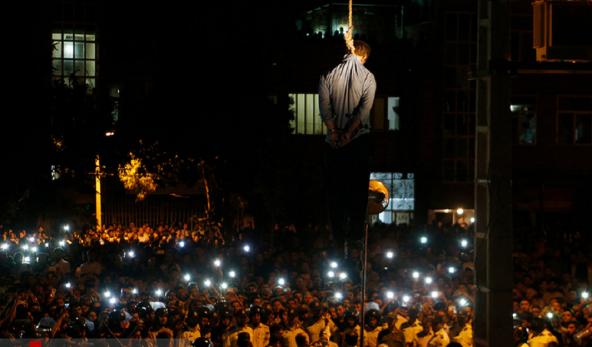
The report shows that in 2017 at least 517 people were executed in the Islamic Republic of Iran. This number is comparable with the execution figures in 2016 and confirms the relative reduction in the use of the death penalty compared to the period between 2010 and 2015.
2018
Drug Offenses
Fair Trial
Iran (Islamic Republic of)
Public Opinion