
Your search “ ”
Document(s)
Little Furmans Everywhere: State Court Intervention and the Decline of the American Death Penalty
By Carol S. Steiker & Jordan M. Steiker, on 1 September 2022
2022
Academic report
Trend Towards Abolition
United States
More details See the document
This article retraces the evolution and recent decline of death peanlty in the United States, notablt through state court interventions. These dynamics between judicial and political action illuminate the importance of state court intervention in the story of the American death penalty’s precipitous decline, which has tended to foreground other institutional actors and to neglect the complex interactions among branches of government. State judicial rulings, though often highly technical and, therefore, less visible and accessible to the public, have been a pervasive and powerful force in the two-decade-long diminution of the practice of capital punishment across the United States.
- Document type Academic report
- Countries list United States
- Themes list Trend Towards Abolition
Document(s)
Ghosts of Executions Past: A Case Study of Executions in South Carolina in the Pre-Furman Era
By John H. Blume, Samuel F. Leibowitz, on 1 September 2022
Academic report
Cruel, Inhuman and Degrading Treatment and Punishment
United States
More details See the document
The protracted and (somewhat) ongoing debate over whether lethal injection—in some or all of its forms—is cruel and unusual punishment under the Eighth Amendment is the newest variation on the question of whether a particular form of capital punishment is inhumane and cruel. The history of capital punishment in the United States over the last two centuries has been punctuated by attempts to find less painful and gruesome ways to kill persons society has condemned to die. Ironically, at least from a historical perspective, some recent executions have seen condemned inmates or their attorneys elect some of the older methods, i.e., electrocution, or offer, as a potentially less painful alternative, the firing squad or death by lethal gas. And some states, including the main subject of this article, have resurrected electrocution and the firing squad because of a claimed inability or difficulty in obtaining execution drugs. In this article, the authors trace the history of execution methods in the pre-modern era of capital punishment (before 1972), primarily in South Carolina, pointing out the often-intractable problems with their implementation process (including specific “botches”), and then address other aspects of executions that have relevance to the current debate about the wisdom and efficacy of retaining the “modern” American death penalty in the twenty-first century.
- Document type Academic report
- Countries list United States
- Themes list Cruel, Inhuman and Degrading Treatment and Punishment
Document(s)
Legislative Expansion and Judicial Confusion: Uncertain Trajectories of the Death Penalty in India
By Anup Surendranath and Maulshree Pathak, on 1 September 2022
Academic report
India
More details See the document
The numbers and the politics of the death penalty in India tell very different stories, presenting complicated narratives for its future. The public reaction to instances of sexual violence and other offences over the last decade and the consequent political response has significantly strengthened the retention and expansion of the death penalty. This is reflected from the fact that that of all the death sentences that district courts impose, only about 5 percent get confirmed in India’s appellate system. However, does this mean there is growing scepticism about the death penalty in the Supreme Court of India? Unfortunately, the answer is far from simple. An assessment of the death penalty in India’s appellate courts during the last decade will demonstrate that a crime-centric approach has hindered any principled discomfort with the death penalty or the manner of its administration. In particular, the Supreme Court has faltered in high-profile death sentence cases (i.e., offences against the state and sexual violence cases), and its track record of commutations has very little to do with principled considerations on sentencing. This paper argues that the political and judicial imagination of the death penalty, as a necessary part of the response to crime, creates significant and unique challenges for the path towards abolition.
This article was first published in Crime Justice Journal: https://www.crimejusticejournal.com/issue/view/119
- Document type Academic report
- Countries list India
Document(s)
Explaining the Invidious: How Race Influences Capital Punishment in America
By Sheri Lynn Johnson, James and Mark Flanagan, Cornell Law School, on 1 September 2022
Academic report
United States
More details See the document
This article primarily focuses on how racial bias creates nearly ubiquitous racial disparities in the imposition of the death penalty; it does so both to amass further reasons McCleskey was wrongly decided, and to point the way forward. Part I provides the necessary foundation by summarizing the history of race and the death penalty in the United States, with a focus on the Supreme Court’s treatment of racial discrimination claims in capital sentencing. Part II, the heart of this Article, examines the multiple psychological mechanisms that create racially biased decision making in capital cases. Understanding those mechanisms further undercuts the Supreme Court’s reasoning in McCleskey and argues for overturning the holding. However, recognizing the reluctance with which today’s Court would view overturning McCleskey, Part III considers whether and how alternative, case-specific uses of the data described in Part II might ameliorate the influence of racial bias in capital sentencing.
- Document type Academic report
- Countries list United States
Document(s)
Race and Age Characteristics of those Sentenced to Death before and after Roper
By Frank R. Baumgartner, on 29 August 2022
2022
Academic report
frMore details Download [ pdf - 111 Ko ]
“The penalty of death is more likely to be imposed on individuals who suffer from various disadvantages: poverty, poor lawyers, mental illness, intellectual deficits, for example. It also is more common among those with white victims compared to minority victims, those who commit crimes in jurisdictions that have previously sentenced more individuals to death, and those who committed their crimes in the 1980s or 1990s as compared to more recent years (see Baumgartner et al. 2018 for details). In this short report I focus on two particular disadvantages: age and minority status.” – Frank R. Baumgartner
Link to the article: https://deathpenaltyinfo.org/news/report-racial-disparities-in-death-sentences-imposed-on-late-adolescent-offenders-have-grown-since-supreme-court-ruling-banning-juvenile-death-penalty
Preventing the return of the death penalty
on 19 August 2022
While the progress of the global abolitionist movement seems irreversible, some abolitionist in law or abolitionist in practice countries are threatening to return to the death penalty and resume executions. Since 2018, the World Coalition has been campaigning globally to systematize a response to these risks of reinstating the death penalty after its abolition.
2022
Maldives
Philippines
Sri Lanka
Turkey
Article(s)
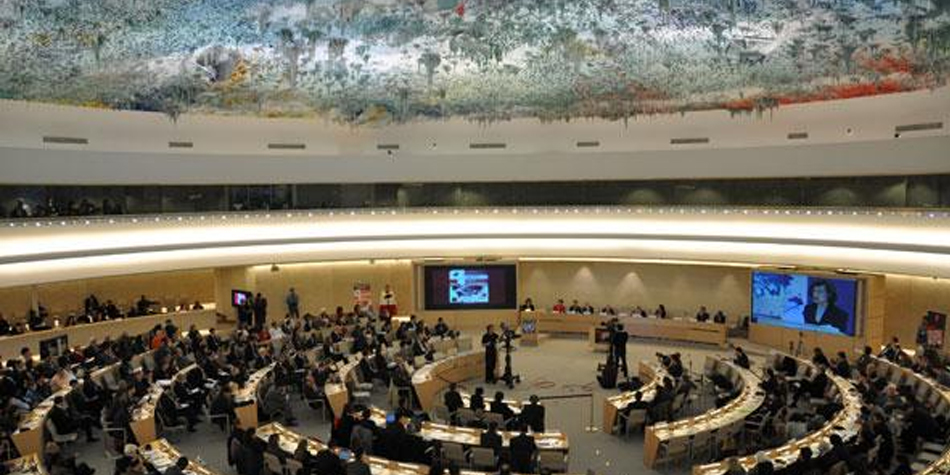
Abolition of the death penalty at the 50th session of the UN Human Rights Council
By Anissa Aguedal, on 19 August 2022
The United Nations Human Rights Council met for its 50th Regular Session from June 13 to July 8, 2022. If you missed it, here is what happened regarding the abolition of the death penalty!

Article(s)
Malawi Supreme Court Reverses Abolition Decision
By World Coalition Against the Death Penalty, on 18 August 2022
On 30 April 2021, the World Coalition published the following article on the abolition of the death penalty in Malawi. Since its publication, the abolitionist status of the country has changed. This article has been updated below. —————————-
2022
Malawi
Document(s)
Shattered Justice – Crime Victims’ Experiences with Wrongful Convictions and Exonerations
By Kimberly J. Cook, on 12 August 2022
2022
Book
United States
More details See the document
Shattered Justice presents original crime victims’ experiences with violent crime, investigations and trials, and later exonerations in their cases. Using in-depth interviews with 21 crime victims across the United States, Cook reveals how homicide victims’ family members and rape survivors describe the painful impact of the primary trauma, the secondary trauma of the investigations and trials, and then the tertiary trauma associated with wrongful convictions and exonerations. Important lessons and analyses are shared related to grief and loss, and healing and repair. Using restorative justice practices to develop and deliver healing retreats for survivors also expands the practice of restorative justice. Finally, policy reforms aimed at preventing, mitigating, and repairing the harms of wrongful convictions is covered.
- Document type Book
- Countries list United States

Article(s)
Joint Statement to condemn the public executions and the surge of executions in 2022 in Iran
By World Coalition Against the Death Penalty, on 11 August 2022
The World Coalition Against the Death Penalty strongly condemn the resumption of public executions in Iran and the surge in the executions in 2022, which goes against the international trends towards abolition of the death penalty.
2022
Iran (Islamic Republic of)