

One Year of the Global Consortium for Death Penalty Abolition
Abolition
Launched in April 2024, the Global Consortium for Death Penalty Abolition completed its first year of activity in March 2025. Bringing together 25 civil society organizations from around the world and funded by the European Union (EU), the Consortium aims at advancing abolition through coordinated advocacy at national, regional, and international levels.
Its efforts include capacity building and training, public awareness and mobilization campaigns, research and documentation, stakeholder engagement, and strategic litigation and legal support.
Key achievements this year
In 2024, Côte d’Ivoire and Zambia ratified the Second Optional Protocol to the International Covenant on Civil and Political Rights (OP2-ICCPR), which seeks the global abolition of the death penalty. With these two ratifications, the number of ratifications reached 92, meeting the Consortium’s 2025 goal of 92 ratifications ahead of schedule.
In October 2024, as part of a broader effort to address Saudi Arabia’s human rights violations, Reprieve intensified its advocacy to prevent the Kingdom from securing a seat on the UN Human Rights Council (HRC). Reprieve, alongside ESOHR and other NGOs, led a coalition of advocacy efforts to expose Saudi Arabia’s human rights abuses, which contributed to Saudi Arabia losing its bid for HRC membership. This was a notable achievement for the human rights community and a significant setback for Saudi Arabia’s efforts to improve its global image while continuing its execution practices at home.
On 17 December 2024, two thirds of the United Nations General Assembly voted in favor of the 10th resolution calling for a global moratorium on the death penalty. For the first time, three countries that had always abstained in previous votes -Kenya, Morocco, and Zambia- voted in favor, marking a meaningful shift in global support.
The year ended on an even more positive note as, on 31 December 2024, Zimbabwe abolished the death penalty in law, becoming the 30th country in Africa to do so. This brought the global total of abolitionist states to 123, just one country away from the Consortium’s 2025 target of 124.
A stronger partnership with the EU’s external service
In 2024, the Consortium deepened its collaboration with the European External Action Service (EEAS) through regular meetings and coordinated advocacy, enhancing understanding of local contexts and supporting the EU’s diplomatic strategies without compromising human rights defenders. As part of this cooperation, the Consortium has been providing monthly communication materials on death penalty abolition, featured on the EEAS Instagram account. Representatives from the Consortium, including HRI and ESOHR, also presented on global death penalty trends to the EU Working Group on Human Rights (COHOM) in October 2024.
The FFPA facilitated engagement with EU delegations, enabling strategic meetings with key EU officials and other FFPA initiatives to foster synergies. These efforts helped coordinate actions and funding strategies aimed at abolishing the death penalty in target countries such as Malawi, Pakistan, and the Philippines, as well as connecting with local civil society organizations interested in collaboration.
A side event at the 68th session of the UN Commission on Narcotic Drugs (CND), co-hosted by HRI and Amnesty International highlighted the disproportionate use of the death penalty for drug-related offenses, revealing a 30% global increase in executions predominantly affecting marginalized populations. Evidence confirms that such punitive measure do not serve as an effective deterrent. Positive reforms from Pakistan, Nigeria, and Indonesia were also shared, along with recommendations emphasizing urgent abolition of the death penalty for drug offenses as a first step toward total abolition; adoption of incremental, multisectoral, evidence-based reforms involving national human rights institutions and the judiciary; enhanced judicial and law enforcement training; comprehensive drug policy reforms addressing systemic issues like prison overcrowding; and stronger leadership from Vienna-based UN bodies such as the United Nations Office on Drugs and Crime (UNODC) and the CND. These insights are particularly relevant to the EU’s broader human rights and drug policy engagement, underscoring the importance of supporting abolitionist efforts and promoting humane, rights-based approaches to drug control.
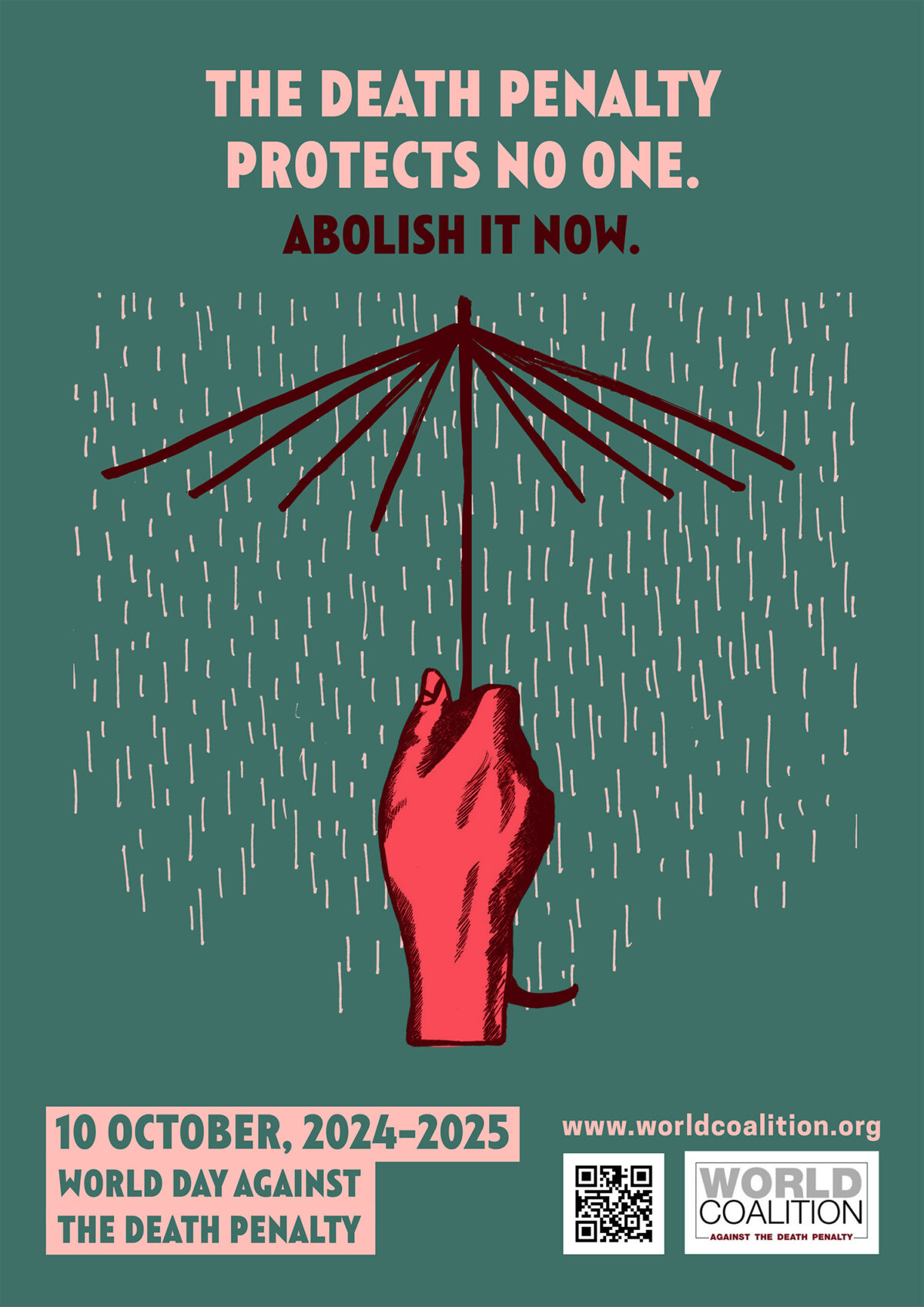
On World Day, the EU and Council of Europe jointly reaffirmed their opposition to the death penalty, amplifying abolitionist messages through European embassies’ social media.
A challenging global landscape
Despite these successes, the global situation remains concerning. The first year of the Consortium faced several challenges. Conflicts in regions such as Gaza, the Democratic Republic of Congo, and Ukraine, as well as other international developments, affected some countries’ willingness and ability to prioritize the death penalty in global discussions. Political shifts caused by national or local elections also delayed or cancelled planned activities.
In 2024, Amnesty International reported 1,518 executions worldwide, the highest number recorded since the peak of 1,634 executions in 2015. These executions took place in 15 countries, with increases mainly in Iran, Saudi Arabia, and Iraq. Furthermore, 46 countries imposed 2,087 new death sentences in 2024. Although this number is lower than in 2023, it is still higher than in 2022. These figures underline the urgent need to support the abolitionist movement and strengthen efforts to end the death penalty.
Working together for impact
Insights from the 2024 World Day Against the Death Penalty confirmed that collaboration is a key driver of impact. As part of the global capacity building action plan, WCADP organized three online communities of practice with HRI, DPP/VERITAS, and WTI. The first webinar focused on advocacy concerning the death penalty for drug offenses, a key driver of executions in 34 countries. HRI shared best practices for engaging with the CND and UNODC while exploring strategic opportunities for abolitionist organizations to advance their advocacy. The second webinar reflected on Zimbabwe’s path to abolition in practice, offering lessons and strategies for overcoming political resistance that could be applied in similar contexts. The third webinar emphasized the need for organizations to provide a safe and supportive environment for impacted individuals in leadership positions, going beyond simply hiring them. The session offered a platform to highlight the experiences and insights of exonerees, share best practices, and explore concrete actions to strengthen organizational inclusion and equity.
Learnings from the World Day 2024 also revealed that interactive formats are especially effective. Street interviews and community discussions sparked meaningful conversations and drew public attention to the issue. Social media continued to play a vital role, with personal stories, infographics, and statistics shared to reach wider audiences. Consortium members also emphasized the importance of combining informative content with interactive tools like quizzes to keep users engaged and learning.
In its first year, the Consortium has enabled new partnerships to emerge and regional dynamics to be strengthened. New players have joined the abolitionist movement, including women’s rights organisations, academic institutions, youth groups and legal professionals. Coordinated actions, such as regional advocacy and campaigns at the United Nations, have helped to forge links between the abolition of the death penalty and other major issues such as women’s rights, restorative justice and the rights of prisoners. These efforts have helped to make the abolitionist movement more inclusive, more locally rooted and better connected on a global scale. Collaboration and finding synergies are vital to maximizing impacts and implement effective advocacy.
Looking ahead
The Consortium’s first year has demonstrated that coordinated action, even in a difficult context, can yield real progress. As it enters its second year, the Consortium remains focused on deepening partnerships, reinforcing public engagement, and building on its early gains to achieve its goal: a world free of the death penalty.
Images’s source: ©FHRI – World Day 2024
Categories
Trend Towards Abolition