
Abolition of the death penalty at the United Nations Human Rights Council 60th session
Advocacy
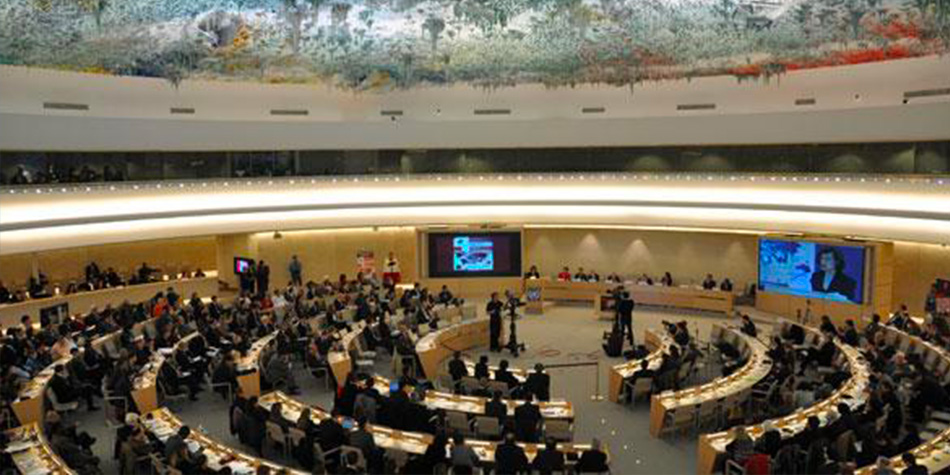
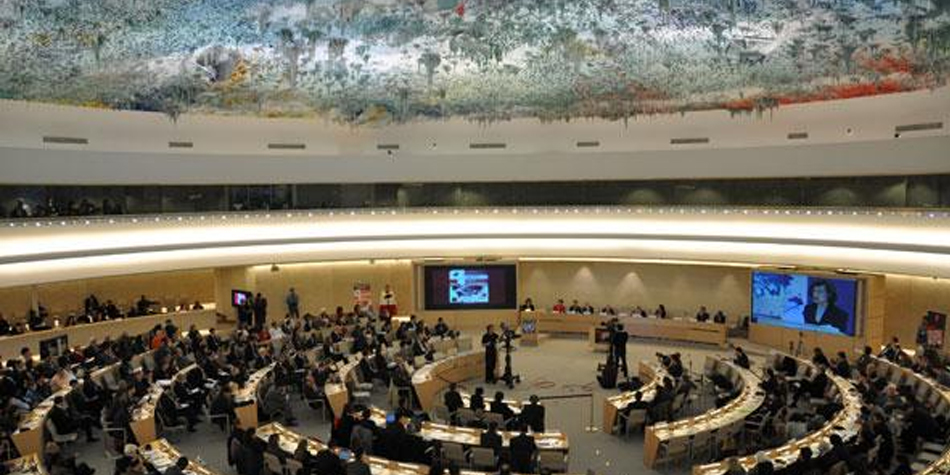
The United Nations Human Rights Council convened its 60th regular session from 8 September to 8 October 2025. If you missed it, here is what happened regarding the abolition of the death penalty!
During the debates
In his 2025 report (“A/HRC/60/47”), the UN High Commissioner for Human Rights expressed deep concern about the marked increase in executions in certain countries and urged immediate moratoria where appropriate. He warned that capital punishment continues to pose grave human-rights risks — in particular due to its irreversibility, the risk of miscarriages of justice and the unequal access to fair trial and legal defence. He called on States that still retain the death penalty to limit its use strictly to “the most serious crimes,” and to ensure that any person facing death-sentence benefits from effective legal representation, possibility of judicial review, commutation or pardon.
The session also included interactive dialogues and country reports addressing the gendered dimensions of capital punishment and other human-rights violations linked to the death penalty. Read more
Civil society interventions and side events
On the occasion of this 60th session, several members of the World Coalition Against the Death Penalty played an active role during HRC60, delivering oral statements and organising side events focused on different aspects of the death penalty:
On 17 September 2025, Open Society Foundations,Harm Reduction International (HRI), Hayat (LIFE), the International Network of People who Use Drugs (INPUD), the International Federation for Human Rights (FIDH), the International Bar Association’s Human Rights Institute, the World Coalition against the Death Penalty, and the Office of the United Nations High Commissioner for Human Rights (OHCHR) hosted the side event “The Abolition of the Death Penalty in Asia: Emerging Challenges and Opportunities for Reform”. It situated national developments in Malaysia, Indonesia, and Pakistan within a broader regional and global framework. By bringing together practitioners from each country to examine both the drivers and constraints of reform, the discussion has illuminated shared challenges, identified transferable strategies, and strengthened the connective tissue of regional solidarity.
Gender-specific death penalty issues were also addressed during the UPR50, covering Belarus, Jamaica, Liberia, Libya, Malawi, Maldives, Marshall Islands, and the United States. This session, organized by TAHR, took place on 16 September 2025. Read more
On 25 September 2025, the situation of women and children’s human rights defenders in Bahrain was highlighted by the Bahrain Center for Human Rights’ side event. Death Penalty Project (DPP) and Death Penalty Research Unit (DPRU) ran a side event on 26 September 2025 to launch a report titled “Between Retention and Abolition: Making Sense of a Death Penalty without Executions” .
On the occasion of this 60th session, several members of the World Coalition Against the Death Penalty presented oral statements on the death penalty.
TAHR coordinated UPR adoptions for Guyana, Kiribati, Kuwait, Laos, and Lesotho, highlighting LGBTIQ+ concerns in some countries. In the Item 6 General Debate, TAHR highlighted the United States’ refusal to participate in its own UPR scheduled for 7 November 2025. Watch the intervention here.
During the Interactive Dialogues, HRI made a brief mention of the death penalty in Sri Lanka, and IBAHRI addressed the situation in Myanmar, with a short reference to the death penalty. This statement was co-sponsored by the International Commission of Jurists, the Law Council of Australia, the Law Society of England and Wales, and Lawyers’ Rights Watch Canada. Watch the intervention here.
ECPM, in collaboration with CPJ, CCPM, and FIACAT, focused on the DRC, and several civil society actors engaged with HCHR and SG DP reports. Watch the intervention here.
Resolutions and institutional outcomes
The Human Rights Council at HRC60 adopted a number of resolutions and decisions related to the Death Penalty. Among these, the Council renewed and broadened the mandate of mechanisms tasked with investigating serious human-rights violations in certain contexts, which has implications for documenting death-penalty-related abuses and supporting future accountability processes.
On 7 October 2025, the Human Rights Council adopted resolution A/HRC/60/L.12 with 31 votes in favour, 8 abstentions and 7 votes against. The resolution, co-sponsored by a broad cross-regional coalition of States, highlights fair-trial guarantees and equality of arms for people facing capital punishment, welcomes the global trend toward abolition, and expresses concern over death sentences imposed for crimes falling below the “most serious crimes” threshold, including drug-related offences. It stresses the disproportionate impact of the death penalty on disadvantaged groups, minorities, women and foreign nationals, and calls for full transparency through disaggregated data on death sentences, executions and pardons. Read the Resolution A/HRC/60/L.12.
On 8 October 2025, the UN Human Rights Council adopted a landmark resolution on drug policy (A/HRC/60/L.31/Rev.1), co-sponsored by 35 States. For the first time, the Council explicitly linked drug policy to human rights and public health, endorsing harm reduction and urging alternatives to incarceration. The text calls for stronger UN coordination, meaningful civil-society participation, rights-respecting crop-control, and a gender perspective in policy design. Russia’s four proposed amendments, including one removing harm-reduction references, were rejected, and the resolution passed by consensus. The OHCHR is tasked with reporting on human-rights challenges and convening an intersessional panel ahead of the Council’s 64th session.
The 61st regular session of the Human Rights Council is scheduled to take place in Geneva from 23 February to 2 April 2026
Uniting Voices for a World Without the Death Penalty
This 60th Human Rights Council was a global meeting point for abolitionists members of the World Coalition, who have coordinated in advance to maximise the impact of their advocacy, making the most of every opportunity to influence change. This collaboration not only amplified advocacy efforts but also effectively countered misleading arguments during the Informals. Members of the World Coalition therefore echoed the abolitionist voices from around the world, representing civil society in the process.
The Council session provides an important platform for abolitionist advocacy, and we saw real progress in the 60th session. TAHR was on the ground for a week, working with colleagues from Malawi and the Maldives to meet with Council delegates to discuss their countries’ upcoming Universal Periodic Reviews. Delegates appreciated the chance to hear about the situation on the ground and how they can exert influence on authorities to move toward abolition. In our oral statements, we celebrated small victories, like Laos agreeing to reduce the number of crimes punishable by death and to establish a moratorium on executions and commute existing death sentences. And it was thrilling to attend the informal debates on the death penalty resolution, particularly because the resolution for the first time addressed the gender dimension of the death penalty.
Amy Bergquist
Associate Program Director, International Justice Program
Categories
Trend Towards Abolition