
Your search “ ”
Article(s)
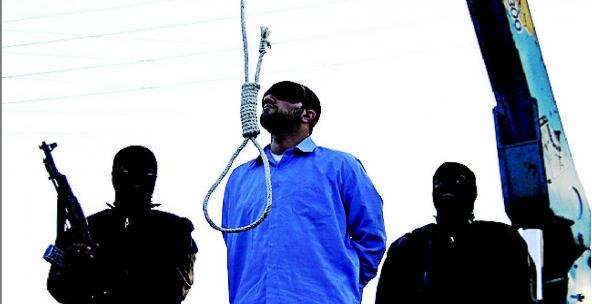
Highest execution numbers in Iran in 10 years
By Mahmood Amiry-Moghaddam, on 13 March 2012
Iran Human Rights has published its annual report on the death penalty in Iran in 2011. IHR’s international spokesperson Mahmood Amiry-Moghaddam says the Iranian authorities are keeping the number of executions high because they use the death penalty as a political tool.
2012
Drug Offenses
Iran (Islamic Republic of)
Juveniles
Women
Article(s)
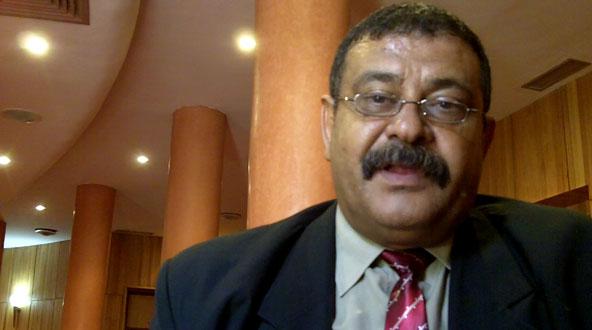
More than 1,000 sentenced to death in Iraq in 8 years
By Dr Nasr Abbood, on 1 March 2012
The Iraqi institutions established after the US-led invasion and the fall of Saddam Hussein have reinstated the death penalty and extended its scope since 2004. In this op-ed article, Iraqi Coalition Against the Death Penalty president Nassr Abood calls for alternative sentences and for a strong stance from the international community.
2012
Drug Offenses
Iraq
Iraq
Terrorism
Article(s)
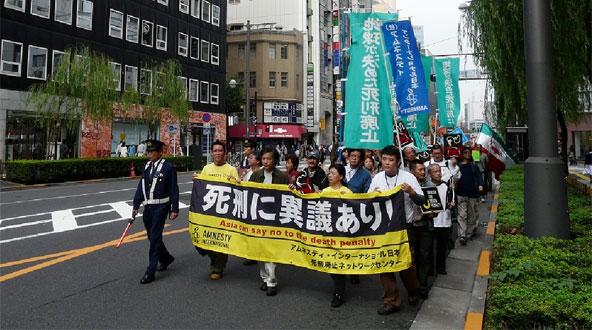
Japan death penalty at turning point
on 9 February 2012
After one year without executions, the Japanese government looks set to resume state killings. The Center for Prisoners’ Rights, a World Coalition member organisation, has launched an urgent petition to reverse the trend.
2012
Clemency
Japan

Article(s)
European Union tightens rules on export of death drug
By Emile Carreau, on 20 January 2012
On 20 December 2011 the European Commission added sodium thiopental to the list of goods that are subject to tight export controls to ensure they do not find their way into overseas death chambers.
2012
Cruel, Inhuman and Degrading Treatment and Punishment
Denmark
United States
Document(s)
The Ride: A Shocking Murder and a Bereaved Father’s Journey from Rage to Redemption
By Brian MacQuarrie , on 1 January 2012
2012
Arguments against the death penalty
More details See the document
The Ride tells the true story of one of the most gruesome crimes in recent memory—the 1997 abduction and murder of ten-year-old Massachusetts resident Jeffrey Curley—and how his father, Bob Curley, managed to heal the deep wounds of rage and emerge to become an outspoken critic of the death penalty.In vivid, compelling prose, Boston Globe reporter Brian MacQuarrie recounts the brutal crime that shocked New England and chronicles what transpires after Jeffrey’s death, which is nearly as shocking as the crime itself. At the heart of this deeply touching story is the way Bob Curley summons the almost superhuman courage to reject the death penalty. In tracing his personal journey, The Ride presents an appealing everyman hero forced into the spotlight by unfathomable circumstances, and compelled to confront the consequences of his fury.
- Document type Arguments against the death penalty
- Themes list Public opinion, Murder Victims' Families, Death Penalty,
Document(s)
Deterrence and the Death Penalty
By John V. Pepper / Daniel S. Nagin / Committee on Deterrence and the Death Penalty / Committee on Law and Justice / Division on Behavioral and Social Sciences and Education / National Research Council , on 1 January 2012
Book
More details See the document
Many studies during the past few decades have sought to determine whether the death penalty has any deterrent effect on homicide rates. Researchers have reached widely varying, even contradictory, conclusions. Some studies have concluded that the threat of capital punishment deters murders, saving large numbers of lives; other studies have concluded that executions actually increase homicides; still others, that executions have no effect on murder rates. Commentary among researchers, advocates, and policymakers on the scientific validity of the findings has sometimes been acrimonious.
- Document type Book
- Themes list Deterrence ,
Document(s)
Who Lives, Who Dies, Who Decides
By Who Decides, Inc., on 1 January 2012
Working with...
More details See the document
The objective of this initiative was to use “the product of art” as a vehicle to educate common people about the history and practice of capital punishment in America and to lift societies consciousness around the idea of endowing a National Death Penalty Museum to preserve its deep history.
- Document type Working with...
- Themes list Public debate,
Document(s)
What Strategies Towards the Abolition of the Death Penalty in West Africa? : Report of the Symposium in Dakar
By FIACAT, on 1 January 2012
NGO report
More details See the document
The regional seminar on the abolition of the death penalty in West Africa took place inDakar (Senegal) from 12-14 November 2012. This workshop brought together nineteenACAT members affiliated to FIACAT. It was therefore possible for each of the nine West Afri-can ACATs1to be represented by two participants (with the exception of Senegal, whichwas represented by three members).Participants at the workshop attended lectures and had the opportunity to developnational action plans for achieving abolition in their countries. According to feedbackreceived at the end of the seminar, attendees found the practical nature of the lectures,and the opportunity to network with other ACATs and learn from the experiences of otherparticipants, particularly beneficial.This document is a collection of all of the lectures from the Dakar seminar, as well asinternational and African texts relating to the death penalty. It is intended as a practicaltool to assist us as we progress towards abolition in Sub-Saharan Africa.
- Document type NGO report
- Themes list Trend Towards Abolition, Member organizations, Country/Regional profiles,
Document(s)
Go With God
By Frank Harriman / Filmbay Ltd., on 1 January 2012
Multimedia content
Iran (Islamic Republic of)
More details See the document
David Taylor has just half an hour to live. He is alone in his cell, in a foreign country, facing execution for something that isn’t even a crime back home in Britain.David has committed the crime of adultery in Iran, a fundamentalist Islamic nation. In the last minutes of his life he tries to come to terms with terrifying finality of his seemingly insignificant actions.Written to be shot in real-time, we follow every second of every minute of the last half hour of David’s life. As he chain smokes his way through to his upcoming oblivion, David is a mess of emotions. From tears and rage to laughter and even calm, he is trying to wrench everything… anything… from his dwindling life.As he interacts with different people, each having a different agenda – the prison governor, the Swedish consul, the guards and his best friend – we see a mirror being held up to reflect the wider world we live in.And finally, it is a simple study of raw human emotion, of friendship and of love.
- Document type Multimedia content
- Countries list Iran (Islamic Republic of)
- Themes list Foreign Nationals, Death Penalty,
Document(s)
Bryan Stevenson: We need to talk about an injustice
By TED / Bryan Stevenson, on 1 January 2012
Multimedia content
United States
More details See the document
In an engaging and personal talk — with cameo appearances from his grandmother and Rosa Parks — human rights lawyer Bryan Stevenson shares some hard truths about America’s justice system, starting with a massive imbalance along racial lines: a third of the country’s black male population has been incarcerated at some point in their lives. These issues, which are wrapped up in America’s unexamined history, are rarely talked about with this level of candor, insight and persuasiveness.Speaker starts talking about the death penalty at the 8 minute mark.
- Document type Multimedia content
- Countries list United States
- Themes list Discrimination,