
Your search “ ”
Document(s)
Silently Silenced: State-Sanctioned Killing of Women
By Eleos Justice, Cornell Center on the Death Penalty Worldwide , on 30 March 2023
2023
Academic report
Women
More details See the document
Silently Silenced: State-Sanctioned Killing of Women examines States’ involvement in ‘feminicide’. Feminicide is understood as the gender-motivated killing of women and girls that States actively engage in, condone, excuse, or fail to prevent. We use the term ‘feminicide’ to refer to the various forms of State-sanctioned killing of women and girls. In this report, we outline States’ direct involvement and complicity in the killings of women and girls and explain these deaths as a product of gendered forms of structural violence upheld and sustained by the State. We examine 3 types of feminicide: gender- related killings of women directly perpetrated by the State, such as the death penalty and extrajudicial killings; gender-related killings of women committed by non-State actors that are excused or condoned by the State; and gender-related killings of women that the State failed to prevent.
- Document type Academic report
- Themes list Women

Article(s)
Moratorium Stays in Place in Sri Lanka and Anti-Death Penalty Petitioners Secure an Official Record in Court Proceedings to Protect Future Rights
By World Coalition Against the Death Penalty, on 28 March 2023
Petitioners challenging the potential resumption of executions in Sri Lanka experienced received reassuring news on 23 February 2023 when the Attorney General of Sri Lanka reported to the Supreme Court that the incumbent President Ranil Wickremesinghe has agreed to not implement executions during his tenure.
2023
Sri Lanka
Trend Towards Abolition

Member(s)
Prisoner’s Future Foundation
on 28 March 2023
Prisoners’ Future Foundation (PFF) is a local non-governmental Ministry of Community Development and Social Services (MCDSS) following government enforcing the NGO Act of 2009 of the laws of Zambia. PFF has in the past handled both advocacy and service delivery, in responding to the needs of currently and formally incarcerated people and citizens who have […]
Zambia
Article(s)
Azerbaijan signs European Protocol for abolition in all circumstances, but still need to ratify it
By Aurélie Plaçais, on 28 March 2023
On 8 March 2023, Azerbaijan signed Protocol No. 13 to the Convention for the Protection of Human Rights and Fundamental Freedoms.
Azerbaijan
Trend Towards Abolition
Document(s)
Seven Winters in Teheran
By Steffi Niederzoll, on 24 March 2023
2023
Multimedia content
Gender
Iran (Islamic Republic of)
Women
frMore details See the document
In the summer of 2007, an older man approaches Reyhaneh Jabbari and asks the architecture student who has a side job as an interior decorator for her help in the design of offices. During the site inspection, he tries to rape her. Reyhaneh stabs him in self-defence. She is arrested for murder and sentenced to death. Reyhaneh was to spend the next seven years in prison while her family hired lawyers and made the public aware of the case. However, in spite of the efforts of national and international politicians and human rights organisations, the Iranian judiciary continued to cite the “right of blood-revenge”. This meant that, as long as Reyhaneh did not withdraw her accusations against the man, his family could demand her death. Reyhaneh stuck to her testimony and was hanged at the age of 26.
In her moving and shockingly topical documentary debut, director Steffi Niederzoll uses among other things original audio and visual material that was smuggled out of Iran. This film, in which Holy Spider actor Zar Amir Ebrahimi lends Reyhaneh her voice, makes visible the injustice in Iranian society and portrays an involuntary heroine who gave her life in the fight for women’s rights.
- Document type Multimedia content
- Countries list Iran (Islamic Republic of)
- Themes list Gender / Women
- Available languages Sept hivers à Téhéran
Document(s)
The Death Penalty for Drug Offences: Global Overview 2022
on 24 March 2023
NGO report
China
Democratic People's Republic of Korea
Drug Offenses
Indonesia
Iran (Islamic Republic of)
Malaysia
Saudi Arabia
Singapore
Viet Nam
More details See the document
Harm Reduction International has monitored the use of the death penalty for drug offences worldwide since our first ground-breaking publication on this issue in 2007. This report, our twelfth on the subject, continues our work of providing regular updates on legislative, policy and practical developments related to the use of capital punishment for drug offences, a practice which is a clear violation of international standards. As of December 2022, Harm Reduction International (HRI) recorded at least 285 executions for drug offences globally during the year, a 118% increase from 2021, and an 850% increase from 2020. Executions for drug offences are confirmed or assumed to have taken place in six countries: Iran, Saudi Arabia, Singapore, plus in China, North Korea and Vietnam – on which exact figures cannot be provided because of extreme opacity. Therefore, this figure is likely to reflect only a percentage of all drug-related executions worldwide. Confirmed death sentences for drug offences were also on the rise; with at least 303 people sentenced to death in 18 countries. This marks a 28% increase from 2021.
- Document type NGO report
- Countries list China / Democratic People's Republic of Korea / Indonesia / Iran (Islamic Republic of) / Malaysia / Saudi Arabia / Singapore / Viet Nam
- Themes list Drug Offenses
Document(s)
Crossing the River Styx, The Memoir of a Death Row Chaplain
By Russ Ford. Charles Peppers. Todd C. Peppers, on 24 March 2023
Book
Death Row Conditions
United States
More details See the document
The Reverend Russ Ford, who served as the head chaplain on Virginia’s death row for eighteen years, raged against the inequities of the death penalty—now outlawed in Virginia—while ministering to the men condemned to die in the 1980s and 1990s. Ford stood watch with twenty-eight men, sitting with them in the squalid death house during the final days and hours of their lives. In July 1990 he accidentally almost became the 245th person killed by Virginia’s electric chair as he comforted Ricky Boggs in his last moments, a vivid episode that opens this haunting book. Many chaplains get to know the condemned men only in these final moments. Ford, however, spent years working with the men of Virginia’s death row, forging close bonds with the condemned and developing a nuanced understanding of their crimes, their early struggles, and their challenges behind bars. His unusual ministry makes this memoir a unique and compelling read, a moving and unflinching portrait of Virginia’s death row inmates. Revealing the cruelties of the state-sanctioned violence that has until recently prevailed in our backyard, Crossing the River Styx serves as a cautionary tale for those who still support capital punishment.
- Document type Book
- Countries list United States
- Themes list Death Row Conditions

Member(s)
International Bar Association’s Human Rights Institute (IBAHRI)
on 14 March 2023
The International Bar Association’s Human Rights Institute (IBAHRI) works with the global legal community to promote and protect human rights and the independence of the legal profession worldwide. The IBAHRI is an autonomous and substantively independent entity of the International Bar Association (IBA), the world’s leading organisation of international legal practitioners, bar associations and law […]
2023
United Kingdom
Article(s)
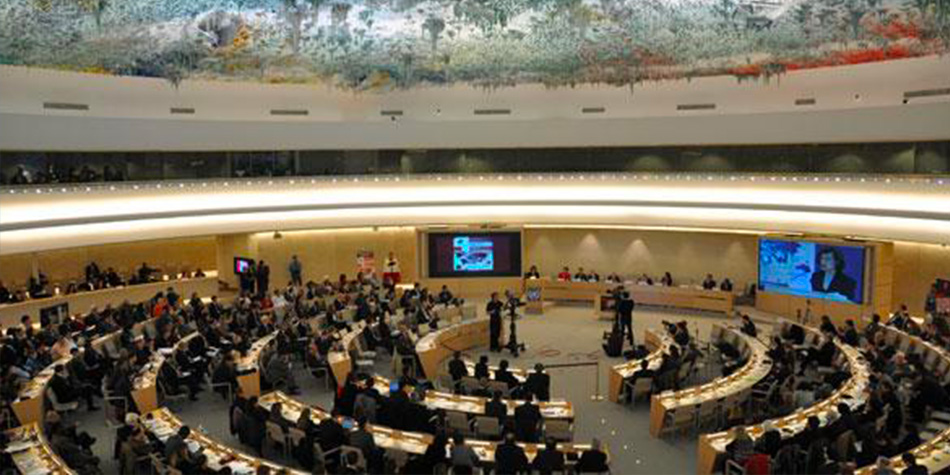
UN High Level Panel on the death penalty and limitation to the most serious crimes
By World coalition against the death penalty, on 14 March 2023
On February 28 2023, the United Nations (UN) Human Rights Council held its biennial high-level panel on the issue of the death penalty.
Public Opinion
Page(s)
Podcasts recomendations
on 14 March 2023
Podcasts or series of podcasts by our members Broken Law Podcast Hosted by the staff of the American Constitution Society. Episode 23: How the World Views the Death Penalty Released on: Nov. 09, 2021 Listen to Podcast ADPAN Podcasts Series of podcasts hosted by The Anti-Death Penalty Asia Network Listen to Podcast Other podcasts to […]