
Your search “ ”
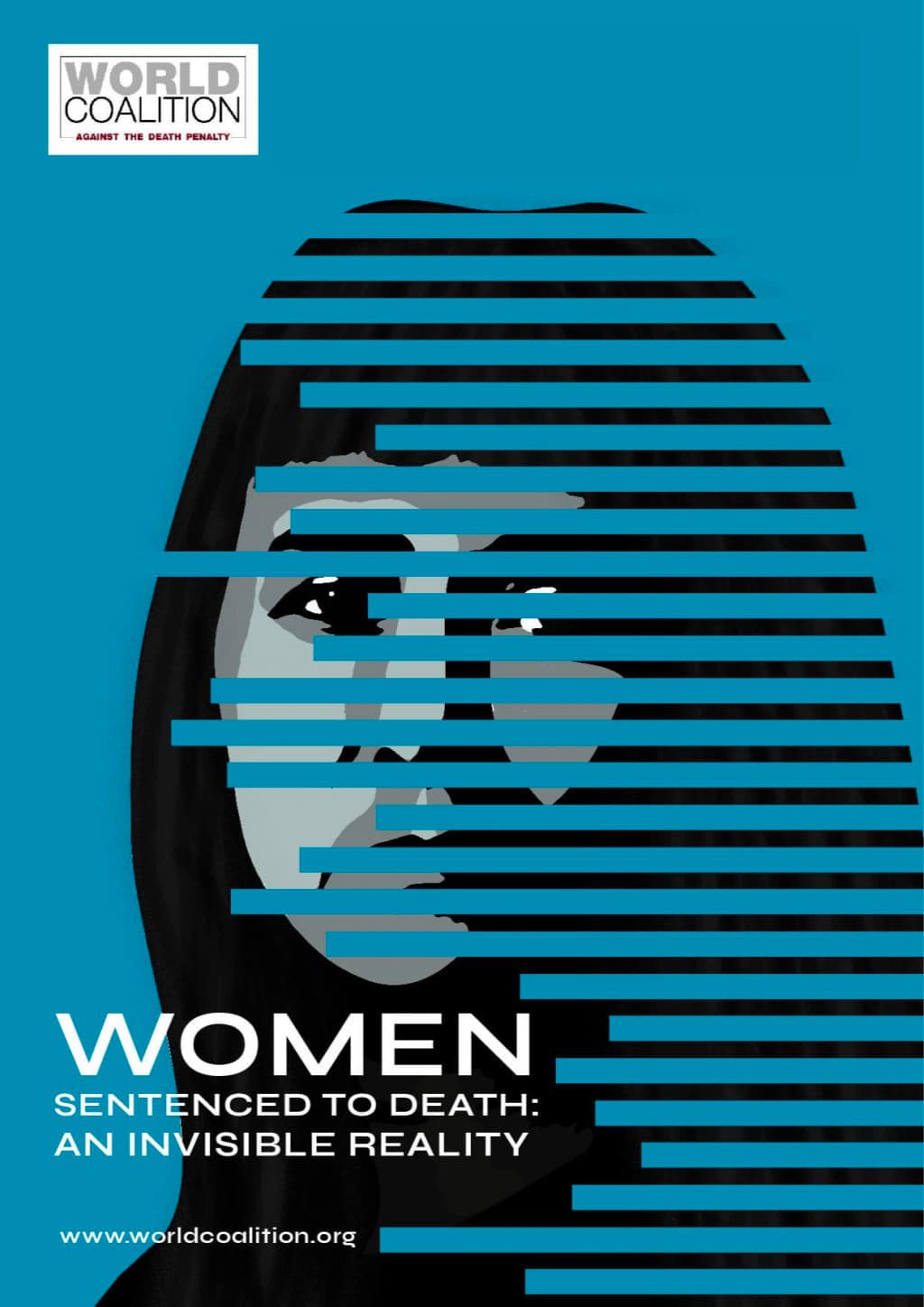
Making gender discrimination in capital punishment visible
on 6 March 2023
Understanding the link between gender discrimination and the death penalty – Women and the death penalty – Gender and sexual minorities and the death penalty Gender and the Death Penalty at the World Coalition – Strengthen the capacity of civil society organizations – Strengthen links with women’s, gender and sexual minority rights movements and organizations […]
2023
Gender
Women
Document(s)
The Mercy Workers, Death Penalty Mitigation Specialists
By Maurice Chammah, The Marshall Project, on 2 March 2023
2023
Article
Legal Representation
United States
More details See the document
For three decades, a little-known group of “mitigation specialists” has helped save death-penalty defendants in the USA by documenting their childhood traumas. A rare look inside one case.
- Document type Article
- Countries list United States
- Themes list Legal Representation
Member(s)
Coalition Congolaise Contre la Peine de Mort (CCPM)
on 27 February 2023
In their desire to promote the abolition of the death penalty in the Republic of Congo, Congolese abolitionists have formed a coalition called the Coalition Congolaise Contre la Peine de Mort, Congolese Coalition Against the Death Penalty (CCCPM). This coalition was created on October 02, 2019 in Brazzaville. Its main objectives are the promotion of […]
2023
Congo
Article(s)
Death Penalty Information Center’s Annual Summary
By Dunia Schaffa, on 27 February 2023
According to the Death Penalty Information Center (DPIC) annual review, 2022 has been the eighth consecutive year with less than 30 people executed and less than 50 people sentenced to death during the year in the United States of America.
United States
Document(s)
He Called Me Sister
By Suzanne Craig Robertson, on 24 February 2023
2023
Book
Death Row Conditions
United States
More details See the document
The fascinating, moving story of a friendship with an inmate on death row. It was a clash of race, privilege, and circumstance when Alan Robertson first signed up through a church program to visit Cecil Johnson on Death Row, to offer friendship and compassion. Alan’s wife Suzanne had no intention of being involved, but slowly, through phone calls and letters, she began to empathize and understand him. That Cecil and Suzanne eventually became such close friends—a white middle-class woman and a Black man who grew up devoid of advantage—is a testament to perseverance, forgiveness, and love, but also to the notion that differences don’t have to be barriers. This book recounts a fifteen-year friendship and how trust and compassion were forged despite the difficult circumstances, and how Cecil ended up ministering more to Suzanne’s family than they did to him. The story details how Cecil maintained inexplicable joy and hope despite the tragic events of his life and how Suzanne, Alan, and their two daughters opened their hearts to a man convicted of murder. Cecil Johnson was executed Dec. 2, 2009.
- Document type Book
- Countries list United States
- Themes list Death Row Conditions
Document(s)
Annual Statistics Report 2022
By Project 39A, on 22 February 2023
2023
NGO report
India
More details See the document
This is the seventh edition of the Death Penalty in India: Annual Statistics Report published by Project 39A at National Law University, Delhi. 2022 represents a significant shift in death penalty adjudication, with the Supreme Court recognising the need to reconsider the capital sentencing framework for the first time since it was laid down in Bachan Singh v. State of Punjab in 1980. In a momentous order, the Supreme Court noted the gaps in the death penalty sentencing framework and has sought to address these concerns through a Constitution Bench towards establishing the components of a real, meaningful and effective capital sentencing hearing. In another decision, the Court laid down guidelines for the collection of mitigating material by trial courts. However, in the same year that the Supreme Court cast grave doubts on the death penalty sentencing framework and its implementation by trial courts, it is of concern that 165 death sentences were imposed by Sessions Courts, the highest in a single year since 2000.
- Document type NGO report
- Countries list India
Document(s)
Capital Punishment & Social Rights Research Initiative – Texas
By Barbara Laubenthal, on 12 February 2023
2023
Multimedia content
Death Row Conditions
United States
More details See the document
The Capital Punishment and Social Rights Research Initiative assesses and analyzes the access of men and women on U.S. death rows to social rights such as health care, social contacts, visitation, communication, recreation and spiritual support. CPSR’s info series on living conditions on death row, state by state. Part 1: Texas
- Document type Multimedia content
- Countries list United States
- Themes list Death Row Conditions
Newsletter January 2023
on 9 February 2023
Online version
2023
Newsletter December 2022
on 9 February 2023
Online version
Document(s)
Bloodshed and Lies: Mohammed bin Salman’s Kingdom of Executions
By Reprieve UK and European Saudi Organization for Human Rights, on 31 January 2023
2023
NGO report
Saudi Arabia
arMore details See the document
Saudi Arabia is a flagrant abuser of the right to life. Between 2010 and 2021, Saudi Arabia executed at least 1243 people, making it one of the most rampant executioners in the world. As of December 2022, the Saudi regime had executed at least a further 147 people in 2022, including 81 people in one day in a mass execution on 12 March 2022.
Saudi Arabia’s use of the death penalty has drastically increased since 2015. This escalation has taken place on the watch of Saudi Arabia’s King Salman, who acceded the throne on 23 January 2015, and his son, Crown Prince and Prime Minister Mohammed bin Salman. The annual rate of executions has almost doubled since King Salman and Mohammed bin Salman came to power in 2015. From 2010-2014 there was an average of 70.8 executions per year. From 2015-2022 there was an average of 129.5 executions per year – a rise of 82%. The six bloodiest years of executions in Saudi Arabia’s recent history have all occurred under the leadership of Mohammed bin Salman and King Salman (2015, 2016, 2017, 2018, 2019 and 2022).
- Document type NGO report
- Countries list Saudi Arabia
- Available languages سفك الدماء والأكاذيب: مملكة إعدام محمد بن سلمان