
Your search “ ”
Article(s)
A Very Moving and Inspiring Closing Ceremony
By Dunia Schaffa, on 30 January 2023
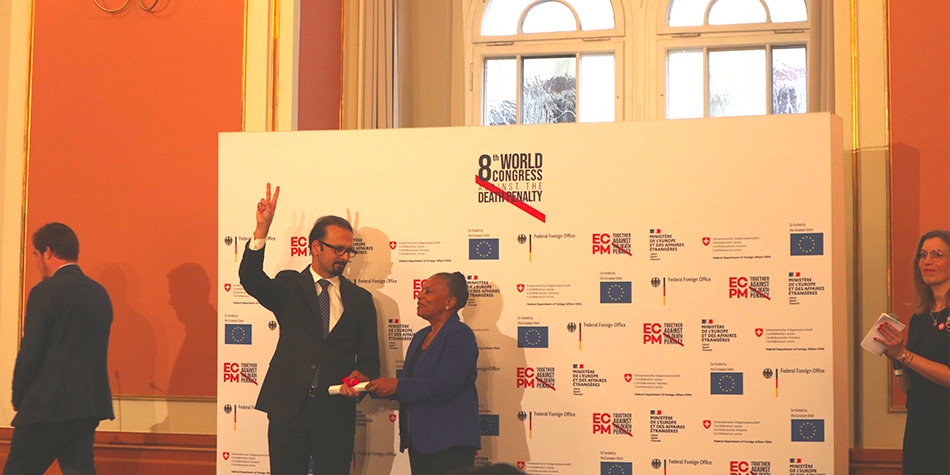
The Closing Ceremony of the 8th World Congress celebrated people who play an immense role in the process of the abolition of the death penalty, with an awards ceremony and a tribute.
2023
Trend Towards Abolition
Article(s)
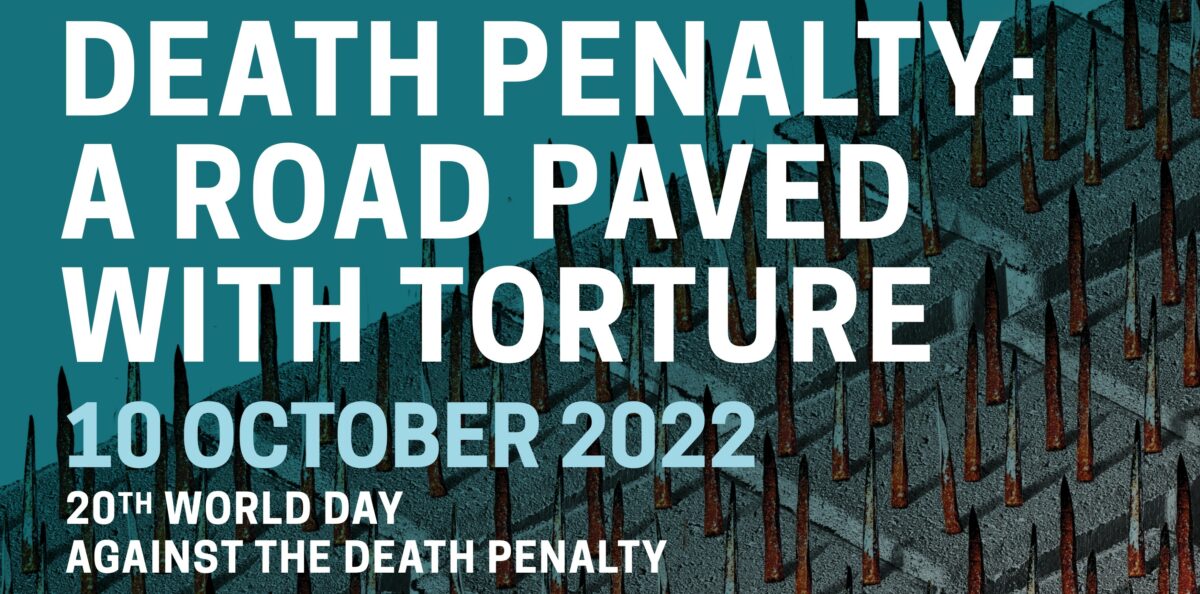
A Look Back at the 20th Anniversary of the World Day Against the Death Penalty
By Dunia Schaffa, on 27 January 2023
“Psychologically I am no longer human.”. This tweet by the World Organization Against Torture, quoting an interview with Richard Yav, a former security guard who was wrongly sentenced to death for 20 years in Benin, sheds light on the various impacts of torture.
2023
Cruel, Inhuman and Degrading Treatment and Punishment
Death Row Conditions
Article(s)
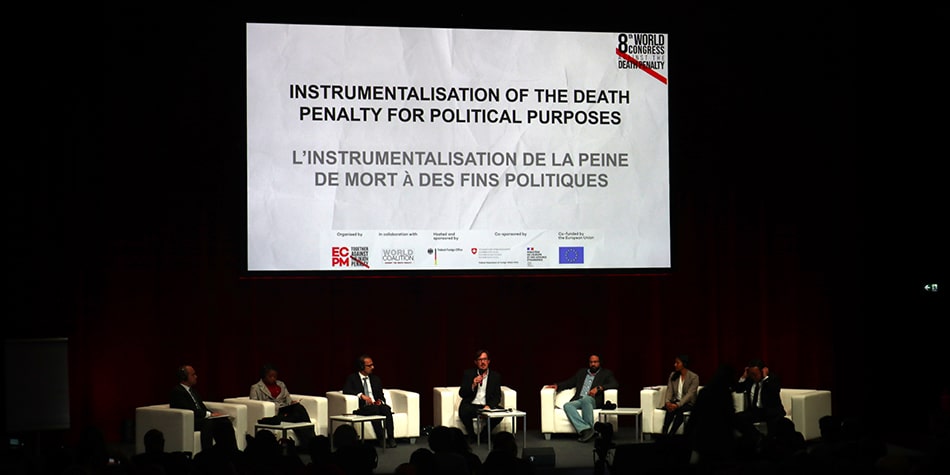
How the Death Penalty is Politicized: A Reflection on the 8th World Congress Against the Death Penalty
By Dunia Schaffa, on 27 January 2023
During the 8th World Congress Against the Death Penalty, in Berlin Germany, the phrase “the death penalty is being used as a political tool” was used frequently – in panels, in round tables, in speeches, even amongst the participants getting a coffee in between Congress events.
Iran (Islamic Republic of)
United States
Article(s)
Advocacy Seminar Held in Berlin for French-Speaking Sub-Saharan Africa Members
By World Coalition Against the Death Penalty, on 26 January 2023
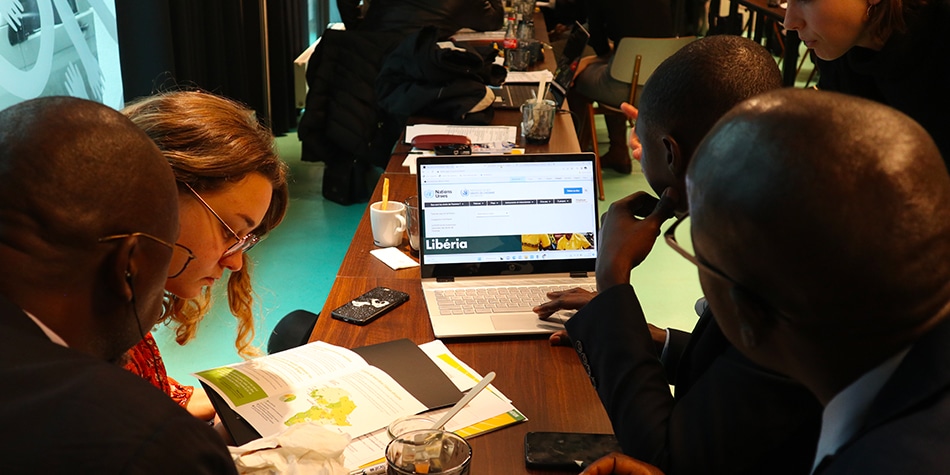
In the margins of the 8th World Congress Against the Death Penalty, member organizations of the World Coalition Against the Death Penalty (World Coalition) and FIACAT’s African ACATs (Féderation international des Action des Chrétiens pour l’abolition de la torture) met in Berlin, Germany for an advocacy seminar.
2023
Benin
Burkina Faso
Cameroon
Central African Republic
Chad
Congo
Côte d'Ivoire
Democratic Republic of the Congo
Guinea
Madagascar
Mali
Niger
Senegal
Togo
Document(s)
Key legal Instruments and texts adopted on Abolition of the death penalty by the Council of Europe
By Council of Europe, on 24 January 2023
2023
Regional body report
Trend Towards Abolition
frMore details See the document
All the Council of Europe documents related to abolition of the death penalty gathered in one page : decisions of the Committee of Ministers, resolutions of the Parliamentary Assembly, Treaties…
- Document type Regional body report
- Themes list Trend Towards Abolition
- Available languages Instruments juridiques clés et textes adoptés sur l'abolition de la peine de mort par le Conseil de l'Europe
Document(s)
Living with a Death Sentence in Kenya: Prisoners’ Experiences of Crime, Punishment and Death Row
By Carolyn Hoyle and Lucrezia Rizzelli, on 24 January 2023
Book
Kenya
More details See the document
The Death Penalty Project’s latest report provides a comprehensive analysis of the lives of prisoners on death row in Kenya. It focuses on prisoners’ socio-economic backgrounds and profiles, their pathways to, and motivation for, offending, as well as their experiences of the criminal justice process and of imprisonment. It complements our previous research, a two-part study of attitudes towards the death penalty in Kenya, The Death Penalty in Kenya: A Punishment that has Died Out in Practice.
While 120 countries around the world have now abolished the death penalty, including 25 in Africa, Kenya is one of 22 African nations that continues to retain the death penalty in law, albeit it has not carried out any executions for more than three decades. As such, Kenya is classified as ‘abolitionist de facto’, the United Nations term for a country that has not carried out an execution for at least 10 years. Yet, while state-sanctioned executions no longer occur, hundreds of people are currently living under sentence of death and others are convicted and sentenced to death each year. As long as the death penalty is retained in law, there remains a risk that executions might resume if there is political change. Moreover, the plight and turmoil of those languishing on death row – consistently the poorest and most vulnerable – cannot be ignored. They are disproportionately sentenced to death and suffer the harshest punishments and treatment.
- Document type Book
- Countries list Kenya
Document(s)
Getting to Death: Race and the Paths of Capital Cases after Furman
By Fagan, Jeffrey and Davies, Garth and Paternoster, Raymond, Columbia Public Law Research Paper, Forthcoming, Cornell Law Review, Vol. 107, No. 1565, 2022, on 13 January 2023
2023
Academic report
Fair Trial
United States
More details See the document
Decades of research on the administration of the death penalty have recognized the persistent arbitrariness in its implementation and the racial inequality in the selection of defendants and cases for capital punishment. This Article provides new insights into the combined effects of these two constitutional challenges. We show how these features of post-Furman capital punishment operate at each stage of adjudication, from charging death-eligible cases to plea negotiations to the selection of eligible cases for execution and ultimately to the execution itself, and how their effects combine to sustain the constitutional violations first identified 50 years ago in Furman. Analyzing a dataset of 2,328 first- degree murder convictions in Georgia from 1995–2004 that produced 1,317 death eligible cases, we show that two features of these cases combine to produce a small group of persons facing execution: victim race and gender, and a set of case-specific features that are often correlated with race. We also show that these features explain which cases progress from the initial stages of charging to a death sentence, and which are removed from death eligibility at each stage through plea negotiations. Consistent with decades of death penalty research, we also show the special focus of prosecution on cases where Black defendants murder white victims. The evidence in the Georgia records suggests a regime marred less by overbreadth in its statute than capriciousness and randomness in the decision to seek death and to seek it in a racially disparate manner. These two dimensions of capital case adjudication combine to sustain the twin failures that produce the fatal lottery that is the death penalty.
- Document type Academic report
- Countries list United States
- Themes list Fair Trial

Article(s)
Zambia is the 25th African State to Abolish the Death Penalty
By Bronwyn Dudley, World Coalition Against the Death Penalty, on 6 January 2023
On 23 December 2022, Zambian President Hakainde Hichilema signed into law Penal Code (Amendment) Bill number 25, which bans the death penalty and the offence of criminal defamation of the president.
2023
Zambia
Helping the World Achieve a Moratorium on Executions
on 20 December 2022
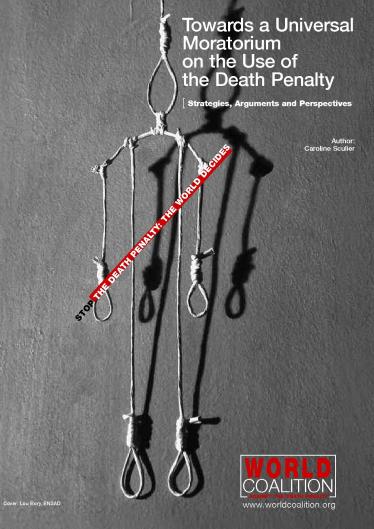
In 2007, the World Coalition made one of the most important decisions in its young history: to support the Resolution of the United Nations General Assembly for a moratorium on the use of the death penalty as a step towards universal abolition. A moratorium is temporary suspension of executions and, more rarely, of death sentences. […]
2022
Moratorium
Article(s)
9th Resolution for a moratorium on the death penalty: the trend is growing
By World Coalition Against the Death Penalty, on 20 December 2022
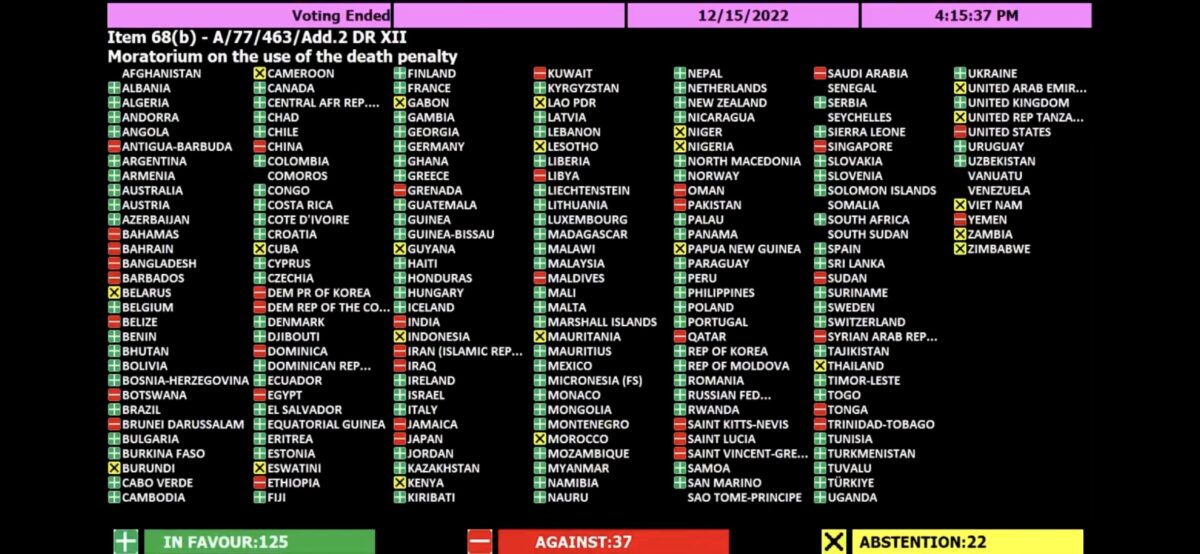
On 15 December 2022, the United Nations General Assembly adopted the 9th resolution for a moratorium on the use of the death penalty with 125 votes in favor (2 more than in 2020), 37 votes against, 22 abstentions and 9 absent.
Moratorium
Trend Towards Abolition