
Your search “ ”

Member(s)
Georgians for Alternatives to the Death Penalty (GFADP)
on 31 January 2025
Georgians for Alternatives to the Death Penalty (GFADP) works to end the death penalty and capital punishment in Georgia, the USA, and around the world. We are a strong, diverse, grassroots, statewide movement which opposes individual executions; supports legislative initiatives aimed at reducing the application of the death penalty until it is ultimately abolished; protects […]
2025
United States

Member(s)
Human Rights Office
on 31 January 2025
Human Rights Office of Kandy Diocese is a catholic organization established in 2008. The HRO campaign to establish the Rule of Law by taking up individual cases of victims of Torture, rape, gender based violence, domestic violence, families of the disappeared and of the prisoners. HRO provide victims “Holistic” assistance – which includes: security, protection, […]
Sri Lanka

Article(s)
Singapore: End harassment and intimidation of Transformative Justice Collective
By the World Coalition Against the Death Penalty, on 17 January 2025
We, the undersigned 11 organizations, condemn in the strongest terms the latest restrictions imposed by the Singapore government on activists from the Transformative Justice Collective (TJC), a civil society group actively opposing the death penalty and advocating for human rights in the country.
2025
Singapore
Page(s)
Cookie Policy
on 19 December 2024
Effective Date: 19-Dec-2024 Last Updated: 19-Dec-2024 What are cookies? This Cookie Policy explains what cookies are and how we use them, the types of cookies we use i.e, the information we collect using cookies and how that information is used, and how to manage the cookie settings. Cookies are small text files that are […]
2024
Document(s)
Report on the situation of abolitionist human rights defenders in Democratic Republic of the Congo
By International Federation of ACATs (FIACAT), on 10 October 2024
2024
NGO report
Democratic Republic of the Congo
Moratorium
frMore details See the document
EXECUTIVE SUMMARY
On February 9, 2024, the government of the Democratic Republic of Congo (DRC) lifted the moratorium on executions that had been in place since 2003. This decision comes amid a deteriorating security situation in the eastern part of the country and increasing restrictions on civic space. Since the moratorium was lifted, human rights defenders who publicly oppose this decision have faced heightened repression from Congolese authorities. This note documents the violations suffered by these defenders in several provinces of the country, including:
– death threats and acts of physical violence;
– arbitrary arrests and detentions;
– baseless accusations and fabricated judicial proceedings;
– violations of property rights and freedom of movement;
– harassment targeting their relatives and collaborators.
These violations are mainly perpetrated by agents of the National Intelligence Agency (ANR), the Military Detection of Unpatriotic Activities (Démiap), and security forces. The impunity enjoyed by the perpetrators allows this repression to continue.
This note also highlights the considerable impact that the criminalization of defenders has on their living conditions and those of their families, including:
– the inability to continue their activities due to fear of reprisals;
– economic and social consequences (loss of employment, marginalization);
– disruption of family life (forced relocations, separations);
– forced exile for some particularly threatened defenders.
The growing phenomenon of repression described in this note is part of a broader context of civic space restrictions in the DRC, exacerbated by the state of siege in place in some eastern provinces. This repression risks having a significant deterrent effect on the entire abolitionist movement and, more broadly, on any form of opposition to the government.
- Document type NGO report
- Countries list Democratic Republic of the Congo
- Themes list Moratorium
- Available languages Rapport sur la situation des défenseur.es abolitionnistes en République Démocratique du Congo

Member(s)
The Inclusion Project
on 13 September 2024
The Inclusion Project (TIP) is a legal services provider founded in 2019 and registered in Nigeria as The Inclusion Project.
2024
Nigeria
Article(s)
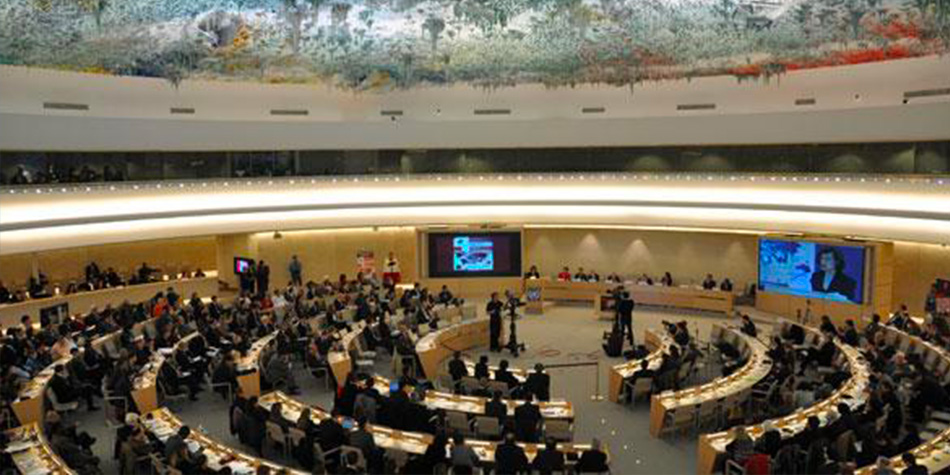
Abolition of the death penalty at the United Nations Human Rights Council 54th session
on 30 August 2024
The United Nations Human Rights Council met for its 54th Regular Session from September 11 to October 13, 2023. If you missed it, here is what happened regarding the abolition of the death penalty!
2024
Trend Towards Abolition
Article(s)
Abolitionist advocacy at the 88th CEDAW Session
on 7 June 2024
The 88th session of the Committee on the Elimination of Discrimination Against Women (CEDAW) was held in Geneva, Switzerland, from May 13 to 31, 2024.
2024
Brazil
Estonia
Gender
Kuwait
Malaysia
Montenegro
Republic of Korea
Rwanda
Singapore
Article(s)
Escalating concerns over the lives of minors threatened with death in Saudi Arabia
on 3 May 2024
The undersigned organizations express their grave concern for the lives of minor defendants particularly the two young men, Yousif Al-Manasif and Ali Al-Mubaiouq, who are at imminent risk of execution in Saudi Arabia following confirmed information that the Specialized Criminal Court of Appeal (SCCA) has upheld their death sentences.
2024
Juveniles
Saudi Arabia
Document(s)
“Don’t let them kill us”: Iran’s relentless execution crisis since the 2022 uprising
By Amnesty International, on 4 April 2024
2024
NGO report
Iran (Islamic Republic of)
faMore details See the document
Published in 2024.
This research briefing documents the horrifying surge in executions in Iran in 2023, the highest in eight years. More than half of the executions were for drug-related offences amid a distressing return to a lethal antinarcotics policy since Ebrahim Raisi’s rise to presidency in 2021. With systemic impunity in Iran, the briefing reiterates the need for states to initiate criminal investigations under the principle of universal jurisdiction into crimes under international law committed by Iranian officials, irrespective of the absence or presence of the accused in their territory. Since the “Woman Life Freedom” uprising of September-December 2022, the Iranian authorities have weaponized the death penalty to create a pervasive climate of fear across the country, exert control over the population, and suppress dissent and any challenge to their iron grip on power. As a result, 2023 saw an exponential increase in the number of recorded executions. The authorities executed at least 853 people in 2023, a 48% increase from 2022 when 576 people were executed and a 172% increase from 2021 when 314 people were executed. Amnesty International believes that the real number of executions is higher, but the Iranian authorities are not transparent about the number of people executed each year and do not make data on executions publicly available.
- Document type NGO report
- Countries list Iran (Islamic Republic of)
- Available languages « ن گ راذ ی د ام ار دنشکب » نارحب مادعا یب یاه ناما رد اریا شزیخ نامز زا ن لاس 1