
Your search “ ”
Document(s)
Shepherds and Butchers
By Oliver Schmitz, on 1 January 2016
2016
Legal Representation
More details See the document
South Africa, 1987. When Leon, a white 19-year-old prison guard commits an inexplicable act of violence, killing seven black men in a hail of bullets, the outcome of the trial – and the court’s sentence – seems a foregone conclusion.Hotshot lawyer John Weber reluctantly takes on the seemingly unwinnable case.A passionate opponent of the death penalty, John discovers that young Leon worked on death row in the nation’s most notorious prison, under traumatic conditions: befriending the inmates over the years while having to assist their eventual execution.As the court hearings progress, the case offers John the opportunity to put the entire system of legally sanctioned murder on trial. How can one man take such a dual role of friend and executioner, becoming both shepherd and butcher?Inspired by true events, this is the story that puts death penalty on trial and changes history.
- Document type Legal Representation
- Themes list Trend Towards Abolition, Death Row Conditions, Discrimination, Country/Regional profiles,
Document(s)
Human Rights Council March 2016 Iran letter
By Impact Iran , on 1 January 2016
Multimedia content
Iran (Islamic Republic of)
More details See the document
Some Human Rights and civil society groups wrote to the member states of the Human Rights Council to get them to support the resolution to renew the mandate of the Special Rapporteur on the situation of human rights in the Islamic Republic of Iran at the 31st session of the United Nations Human Rights Council.
- Document type Multimedia content
- Countries list Iran (Islamic Republic of)
- Themes list International law, Most Serious Crimes, Country/Regional profiles,
Document(s)
Annual report on the death penalty in Iran 2015
By Ensemble contre la peine de mort (ECPM) / Iran Human Rights (IHR), on 1 January 2016
NGO report
faMore details See the document
The 8th annual report of Iran Human Rights (IHR) on the death penalty provides an in-depth assessment of how the capital punishment was implemented in 2015 in the Islamic Republic of Iran.In addition to providing the number of executions that were conducted, the report also looks at the trends compared to previous years, the methods of execution, geographical distribution, the charges that were used by authorities to justify the executions and the articles in the penal law that were used to issue the death sentences.
- Document type NGO report
- Themes list Statistics, Country/Regional profiles,
- Available languages بخش اول از گزارش سالانه اعدام - دستکم ۷۵۳ اعدام در سال ۲۰۱۴
Document(s)
The Harrowing Testimonies of Death Penalty Executioners
By Lucy Tiven / attn, on 1 January 2016
Working with...
More details See the document
The accounts of the “anonymous execution teams” who implement the death penalty are chilling, and rarely reach the public sphere, because their identities are protected by stringent state laws. Rare interviews from retired corrections officers, wardens, and prison chaplains, as well as those included in the 2000 Peabody Award winning radio documentary “Witness to an Execution” give us glimpses of executioners and their experiences.
- Document type Working with...
- Themes list Methods of Execution, Lethal Injection, Electrocution, Death Penalty,
Document(s)
Growing up on death row. The death penalty and juvenile offenders in Iran
By Amnesty International, on 1 January 2016
NGO report
frMore details See the document
Two decades after Iran ratified the Convention on the Rights of the Child, the authorities continue to show contempt for one of its core principles – the prohibition of the death penalty for juvenile offenders (people younger than 18 at the time of the crime). Indeed, Iran tops the grim global table of executioners of juvenile offenders.The report analyses the Iranian Penal System with regard to juvenile offenders, acknowledges the reforms, presents the recent trends and points out the major shortcomings that still need to be addressed in view of a full compliance of the Islamic Republic of Iran with the international standards.
- Document type NGO report
- Themes list Juveniles, Death Penalty, Country/Regional profiles,
- Available languages Iran: Synthèse et les conclusions du rapport sur la peine de mort en Iran.
Document(s)
Factsheet for Parliamentarians
By World Coalition Against the Death Penalty, on 1 January 2016
Working with...
frMore details Download [ pdf - 534 Ko ]
While the death penalty remains, persons with mental disabilities are at risk of being sentenced to death and executed in breach of international standards. This briefing paper provides concrete examples of what can be done to address this risk, including by ensuring that all states have laws that embed international protections in their domestic legislation and by extending protection to those with [serious] mental illness not covered by existing proscriptions against executing persons affected by “insanity”.
- Document type Working with...
- Themes list Mental Illness, Intellectual Disability,
- Available languages Fiche pratique pour les parlementaires

Article(s)
ADPAN welcomes Mongolia’s decision abolish death penalty in law
By ADPAN, on 18 December 2015
Mongolia abolished the death penalty for all crimes in law on 3 December 2015 by adopting a new Criminal Code without any reference to capital punishment. Mongolia had already taken a strong commitment in 2012 by ratifying the Second Optional Protocol to the ICCPR, and it was one of the World Coalition’s target countries for the follow-up of the ratification campaign. The new Criminal Code will come into effect in September 2016
2015
Article(s)
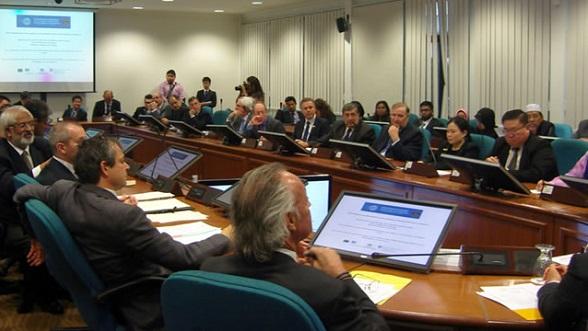
Parliamentarians lead Malaysia Towards Abolition of the Mandatory Death Penalty
By Elisa Bellotti, on 11 December 2015
On 17 November 2015, Parliamentarians for Global Action organized a roundtable and consultations on the abolition of the mandatory death penalty in Malaysia. Parliamentarians play a major role in the country’s journey towards abolition.
2015
Malaysia

Article(s)
Inquiry into Australia’s Advocacy for the Worldwide Abolition of the Death Penalty
By Peter Norden, on 25 November 2015
On 17, 20 and 27 November, the Australian Parliamentary Committee on Foreign Affairs is conducting public hearings on Australia’s advocacy for the abolition of the death penalty. The World Coalition and its members uses this opportunity to make their voices heard.
2015
Australia
Article(s)
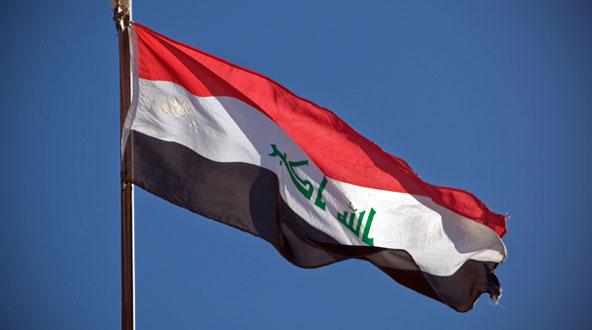
Terrorism is no excuse for unfair trials in Iraq
By Elisa Belotti, on 25 November 2015
Earlier in November, the UN Human Rights Committee released its concluding observations on Iraq’s implementation of the International Covenant on Civil and Political Rights. The Committee and civil society’s representatives specifically dwelled on Iraq’s application of the death penalty.
Fair Trial
Iraq
Iraq
Terrorism