Your search “ ”


mid term 2022

Article(s)

Mid-terms: A first half of 2022 rich in abolitions

By the World Coalition Against the Death Penalty, on 13 September 2022

The first six months of 2022 have been rich for the abolitionist community with two new abolitionist countries and a new ratification of the Second Optional Protocol to the International Covenant on Civil and Political Rights aiming at the abolition of the death penalty. However, some countries continue to use the death penalty and there […]

2022
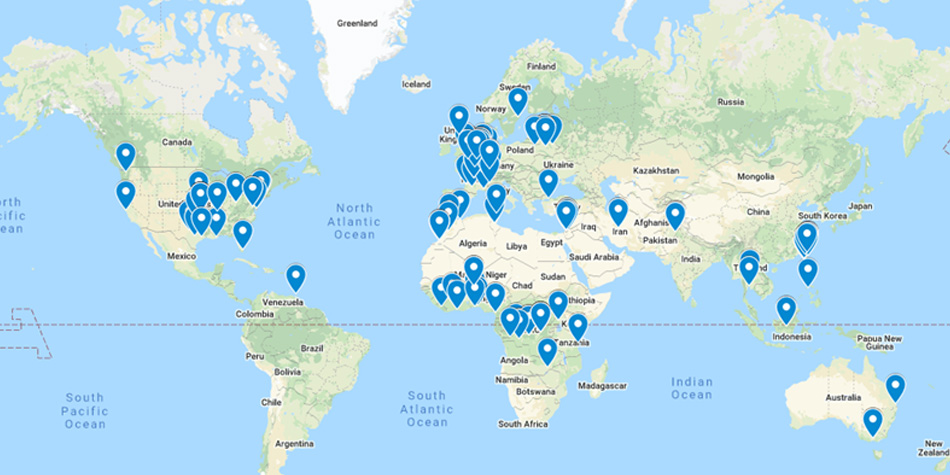
19-world-day-against-the-death-penalty-events-map

Article(s)

Take Action for World Day 2022!

By World coalition against the death penalty, on 9 September 2022

Take action now! The 20th World Day Against the Death Penalty is an excellent opportunity to publicly oppose the use of this inhumane punishment and to support those who are fighting for its abolition all over the world. > Spread the word on Facebook, Twitter and Instagram: #nodeathpenalty > Find out more about the World […]

2022

Cruel, Inhuman and Degrading Treatment and Punishment

A candlelight vigil to protest the execution of Nagaenthran K. Dharmalingam in Singapore (Mohd Rasfan/AFP via Getty Images)

Article(s)

Death penalty: Singapore’s growing abolition movement

By Kirsten Han, on 5 September 2022

Article first published by the Interpreter Public support for capital punishment isn’t as overwhelmingand unshakeable as the government often portrays it to be.

2022

Singapore

ACS Logo

Member(s)

The American Constitution Society (ACS)

on 5 September 2022

The American Constitution Society (ACS) is a United States-based network of progressive lawyers, law students, judges, policymakers, legislators, and academics dedicated to realizing the promises of the U.S. Constitution by advancing and defending democracy, justice, equality, and liberty; securing a government that serves the public interest; and guarding against the abuse of law and the […]

United States

Document(s)

(Not) Talking about Capital Punishment in the Xi Jinping Era

By Tobias Smith, Matthew Robertson and Susan Trevaskes, on 1 September 2022


2022

Academic report

China


More details See the document

An investigation into the death penalty in the People’s Republic of China in the Xi Jinping era (2012–) shows that unlike previous administrations, Xi does not appear to have articulated a signature death penalty policy. Where policy in China is unclear, assessing both the quality and frequency of discourse on the topic can provide evidence regarding an administration’s priorities.
This article was first published in Crime Justice Journal: https://www.crimejusticejournal.com/issue/view/119

  • Document type Academic report
  • Countries list China

Document(s)

Framing Death Penalty Politics in Malaysia

By Thaatchaayini Kananatu, on 1 September 2022


Academic report

Malaysia


More details See the document

The death penalty in Malaysia is a British colonial legacy that has undergone significant scrutiny in recent times. While the Malaysian Federal Constitution 1957 provides that ‘no person shall be deprived of his life or personal liberty save in accordance with law’, there are several criminal offences (including drug-related crimes) that impose the mandatory and discretionary death penalty. Using Benford and Snow’s framing processes, this paper reviews death penalty politics in Malaysia by analysing the rhetoric of abolitionists and retentionists. The abolitionists, comprising activist lawyers and non-government organisations, tend to use ‘human rights’ and ‘injustice’ frames, which humanise the ‘criminal’ and gain international support. The retentionists, such as victims’ families, use a ‘victims’ justice’ frame emphasising the ‘inhuman’ nature of violent crimes. In addition, the retentionist state shifts between ‘national security’ and ‘national development’ frames. This paper finds that death penalty politics in Malaysia is predominantly a politics of framing.
This article was first published in Crime Justice Journal: https://www.crimejusticejournal.com/issue/view/119

  • Document type Academic report
  • Countries list Malaysia

Document(s)

Holdouts in the South Pacific: Explaining Death Penalty Retention in Papua New Guinea and Tonga

By Daniel Pascoe and Andrew Novak, on 1 September 2022


Academic report

Papua New Guinea

Tonga


More details See the document

The South Pacific forms a cohesive region with broadly similar cultural attributes, legal systems and colonial histories. A comparative analysis starts from the assumption that these countries should also have similar criminal justice policies. However, until 2022, both Papua New Guinea and Tonga were retentionist death penalty outliers in the South Pacific, a region home to seven other fully abolitionist members of the United Nations. In this article, we use the comparative method to explain why Papua New Guinea and Tonga have pursued a different death penalty trajectory than their regional neighbours. Eschewing the traditional social science explanations for death penalty retention, we suggest two novel explanations for ongoing retention in Papua New Guinea and Tonga: the law and order crisis in the former and the traditionally powerful monarchy in the latter.
This article was first published in Crime Justice Journal: https://www.crimejusticejournal.com/issue/view/119

  • Document type Academic report
  • Countries list Papua New Guinea / Tonga

Document(s)

Ambivalent Abolitionism in the 1920s: New South Wales, Australia

By Carolyn Strange, on 1 September 2022


Academic report

Australia


More details See the document

In the former penal colony of New South Wales (NSW), a Labor government attempted what its counterpart in Queensland had achieved in 1922: the abolition of the death penalty. Although NSW’s unelected Legislative Council scuttled Labor’s 1925 bill, the party’s prevarication over capital punishment and the government’s poor management of the campaign thwarted abolition for a further three decades. However, NSW’s failure must be analysed in light of ambivalent abolitionism that prevailed in Britain and the US in the postwar decade. In this wider context, Queensland, rather than NSW, was the abolitionist outlier.
This article was first published in Crime Justice Journal: https://www.crimejusticejournal.com/issue/view/119

  • Document type Academic report
  • Countries list Australia

Document(s)

‘Upholding the Cause of Civilization’: The Australian Death Penalty in War and Colonialism

By Mark Finnane, on 1 September 2022


Academic report

Australia


More details See the document

The abolition of the death penalty in Queensland in 1922 was the first in Australian jurisdictions, and the first in the British Empire. However, the legacy of the Queensland death penalty lingered in Australian colonial territories. This article considers a variety of practices in which the death penalty was addressed by Australian decision-makers during the first half of the 20th century. These include the exemption of Australian soldiers from execution in World War I, use of the death penalty in colonial Papua and the Mandate Territory of New Guinea, hanging as a weapon of war in the colonial territories, and the retrieval of the death penalty for the punishment of war crimes. In these histories, we see not only that the Queensland death penalty lived on in other contexts but also that ideological and political preferences for abolition remained vulnerable to the sway of other historical forces of war and security.
This article was first pubished in Crime Justice Journal: https://www.crimejusticejournal.com/issue/view/119

  • Document type Academic report
  • Countries list Australia

Document(s)

Anti–Death Penalty Advocacy: A Lawyer’s View from Australia

By Julian McMahon SC, on 1 September 2022


Article

Australia


More details See the document

This article reviews the executions of Australians in the region and the Australian responses over the past two decades. Informed by the author’s legal defence role in death penalty cases in Singapore and Indonesia and other countries, the article explores developments in anti–death penalty advocacy since 2015: the parliamentary enquiry, the ‘whole of government’ strategy led by the Department of Foreign Affairs and Trade and the efforts made by Australia and Australians in Asia.
This article was first published in Crime Justice Journal: https://www.crimejusticejournal.com/issue/view/119

  • Document type Article
  • Countries list Australia